
Table of Contents
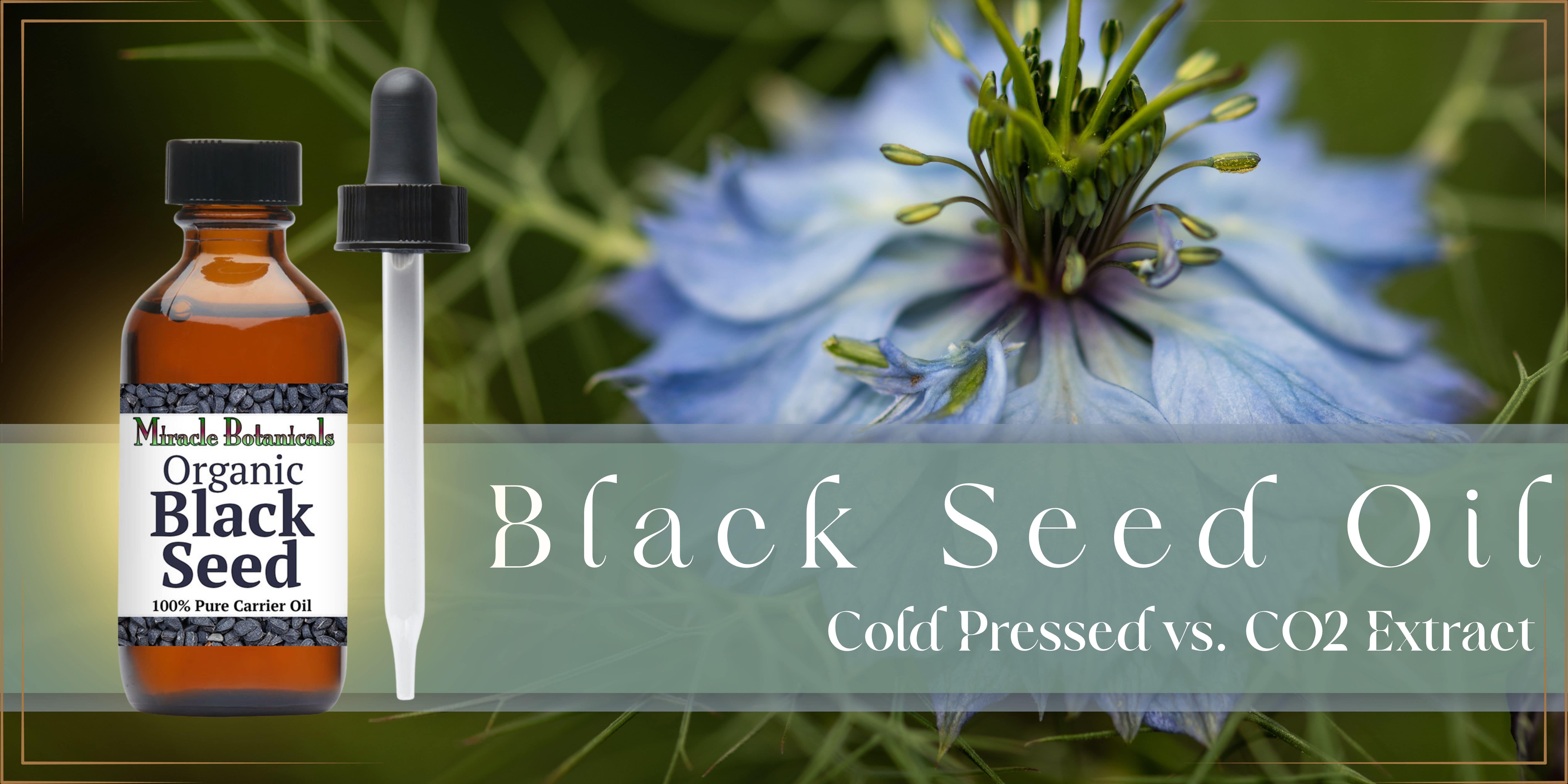
Our two black seed oils begin with the same organic Nigella sativa seeds, but they feel and behave differently in a blend. The cold-pressed oil is a light, amber carrier you can reach for after a shower or before washing your hair. The CO₂ total extract is richer, pepperier and much more concentrated in certain chemical components, like thymoquinone. Here’s how to choose between them.
A small seed with a long history
Black seed also goes by black cumin and kalonji. It comes from Nigella sativa, a member of the buttercup family. Across the Middle East and South Asia, the peppery seeds have long been used to flavor breads and other foods and have also had a place in traditional herbal practices. Archaeologists have even identified ancient nigella seeds at Boyalı Höyük in what is now Türkiye. Read the archaeological study.
Cold-pressed black seed oil and CO₂ extract at a glance
- Cold-pressed black seed oil · about 1% thymoquinone. Mechanical pressing releases the seed’s fatty oil. Choose it as the base for a facial or body oil, an essential oil blend, or a simple hair and scalp routine. Explore our Organic Cold-Pressed Black Seed Oil.
- Black cumin seed CO₂ total extract · about 40% thymoquinone. Pressurized carbon dioxide draws out the seed’s aromatic compounds along with its fatty oil. We like this thicker, more pungent extract as a small part of a topical blend. Explore our Organic Black Cumin Seed CO₂ Total Extract.
Cold-pressed black seed oil for skin, hair and scalp
The pressed oil acts as an emollient. It softens the skin’s surface and leaves a light film that helps hold in moisture. Try smoothing a few drops over damp skin after bathing, or use it as the carrier in a properly diluted essential oil blend.
For a pre-wash scalp massage, part your hair and work a little oil into the scalp with your fingertips, then shampoo it out. You can also smooth a little over dry ends for softness and shine. Think of it as a conditioning step.
Black Seed Oil, Organic (Nigella Sativa L.)
$22.00
Botanical Name: Nigella Sativa L. Plant Part: Seed Method of Extraction: Cold Pressed Country of Origin: Turkey Color/Consistency: Slightly Cloudy, Amber, Thin Consistency for a Carrier Oil Certified Organic Main Chemical Component: Linoleic Acid (55.12%) … read more

Black Seed Oil for Hair Growth and Scalp Health: An Ancient Botanical Tradition
For centuries, Black Seed Oil has been treasured for its ability to nourish the hair and scalp. From ancient Babylonia to traditional Middle Eastern hair-care practices, Nigella sativa has a long history of use in botanical preparations intended to encourage stronger, healthier-looking hair.
Today, we're beginning to understand the chemistry behind this remarkable oil's reputation.
Cold-Pressed Black Seed Oil is especially rich in essential fatty acids, including linoleic acid (omega-6) and oleic acid (omega-9). These nourishing compounds help maintain the scalp's natural moisture barrier, soften dry hair, and improve manageability. Regular oiling can also help reduce friction and breakage, allowing hair to retain more of its natural length.
But Black Seed Oil offers more than simple moisture.
One of its most fascinating constituents is thymoquinone, a naturally occurring compound studied for its antioxidant and anti-inflammatory properties. Because inflammation and oxidative stress can influence the health of the scalp and hair follicles, researchers have become increasingly interested in thymoquinone's potential role in supporting healthy hair growth.
In fact, a small clinical study published in 2013 explored a topical Nigella sativa preparation for people experiencing excessive hair shedding. Researchers observed encouraging improvements in hair density and thickness, suggesting that this ancient botanical deserves further investigation.
Traditionally, black seed oil has also been massaged directly into the scalp or incorporated into nourishing hair treatments, sometimes alongside other botanical ingredients such as honey.
For a simple botanical hair ritual, massage a small amount of Cold-Pressed Black Seed Oil into the scalp and work it through the lengths of the hair. Allow it to absorb before washing, or apply a few drops to the ends of dry hair to soften and condition.
Whether used as a scalp massage oil, a deep-conditioning treatment, or a nourishing addition to a natural hair-care routine, Cold-Pressed Black Seed Oil offers a beautiful connection between traditional botanical wisdom and modern plant science.
Thymoquinone and what researchers have found
Thymoquinone is a naturally occurring compound in black seed oil and one reason the plant has drawn medicinal research interest. In lab and animal studies, researchers have found that isolated thymoquinone can dampen signals involved in inflammation. In a separate lab study, it reduced signs of oxidative stress and inflammation in cultured human skin cells exposed to UVA. Read the inflammation study and the skin-cell study.
It is also believed that thymoquinone can help immune responses and support metabolic health.
How to use black cumin seed CO₂ extract
Start with a small amount blended into a lighter carrier for a face or body oil.
If you want one bottle for skin, scalp and blending, start with the cold-pressed oil. If you’re making a topical blend and want the seed’s deeper, peppery aroma in a more concentrated form, reach for the CO₂ extract.
Black Cumin Seed (Organic) - CO2 Total Extract (Nigella Sativa)
$44.00
Botanical Name: Nigella Sativa Plant Part: Dried Seeds Method of Extraction: CO2 Total Extract Country of Origin: Turkey Color/Consistency: Yellow to Brown Color, with Slight Viscous Consistency/Liquid at Room Temperature Aroma: Pungent with Earthy and Peppery notes Main Chemical Components: Linoleic… read more