
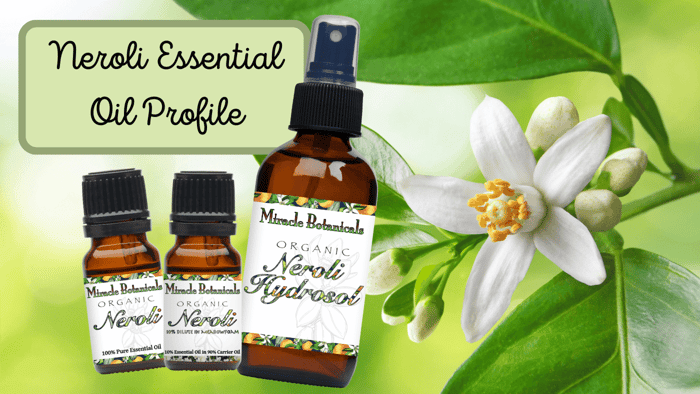
Neroli Essential Oil: The Flower Said to Carry the Light of Angels
There are certain plants that seem to exist halfway between medicine and myth.
Neroli is one of them.
Distilled from the fragile white blossoms of the bitter orange tree (Citrus aurantium amara), Neroli essential oil has captivated herbalists, physicians, perfumers, mystics, queens, and healers for centuries. Its aroma is radiant, honeyed, softly bitter, floral, and strangely alive—as though sunlight itself had been captured inside a flower.
To walk through orange groves during blossom season is unforgettable. The air becomes almost impossibly fragrant. Entire landscapes seem to breathe sweetness. In Egypt, Morocco, Tunisia, Sicily, and Southern Spain, Neroli season still arrives like a kind of living ceremony—where families rise early to hand-harvest blossoms before the morning heat alters their delicate aromatic compounds.
The flowers bruise easily.
Their fragrance changes quickly once picked.
Everything about Neroli requires gentleness.
And perhaps that is why the oil itself has become so associated with emotional softness, beauty, tenderness, and light.
For centuries, Neroli has occupied a unique place in botanical medicine—not merely as perfume, but as a remedy for grief, nervous exhaustion, emotional constriction, insomnia, skin depletion, and the invisible heaviness people carry after prolonged stress or heartbreak.
Few oils have inspired such poetic devotion across both perfumery and herbalism.
Valerie Ann Worwood once wrote:
“Neroli essential oil touches the realms of the angels, and anyone who uses it is brushed with the light of angels wings.”
*Above passage adapted from Aromatherapy for the Spirit by Valerie Ann Worwood
While poetic, the quote reflects something many people genuinely experience with Neroli: a feeling of brightness returning after darkness. A sense of spaciousness entering the nervous system. A softening.
Unlike heavier florals that feel narcotic or overpowering, Neroli possesses air inside it. Movement. Lift. There is sweetness, yes—but also freshness, greenness, and a subtle bitterness inherited from the bitter orange tree itself.
That bitterness matters more than people realize. In traditional herbalism, bitters stimulate movement. They awaken digestion, circulation, liver function, emotional stagnation, and energetic heaviness.
Neroli almost behaves like an aromatic bitter for the psyche—
brightening the emotional field while simultaneously calming it.
The Ancient Origins of Neroli
Long before Neroli became associated with European royalty, orange blossom preparations were already prized throughout the Middle East and North Africa.
Bitter orange trees likely traveled westward from Asia through ancient trade routes into Persia, Arabia, North Africa, and eventually the Mediterranean. During the Islamic Golden Age, physicians, alchemists, and distillers refined sophisticated methods of botanical extraction, preserving traditions that deeply shaped both perfumery and medicine.
At the time, distillation was not viewed merely as chemistry. It was spiritual philosophy, medicine, botanical science, and alchemy intertwined.
Orange blossom water became central to ceremonial foods, beauty preparations, nervous system remedies, and spiritual practices throughout Morocco, Egypt, Tunisia, Turkey, and Persia. The blossoms symbolized purity, fertility, tenderness, and renewal after hardship.
Even today, orange blossoms are woven into wedding ceremonies throughout parts of the Mediterranean and North Africa as symbols of love, innocence, emotional blessing, and new beginnings.
Cleopatra, Royal Courts & the Perfume of Arrival
The mythology surrounding Neroli is immense.
One of the most enduring legends claims Cleopatra perfumed the sails of her ships with Neroli oil before traveling to meet Mark Antony, allowing the scent to drift across the sea before she herself appeared. Whether historically precise or partially romanticized through centuries of retelling, the image captures something true about Neroli:
Its fragrance travels ahead of presence.
It enters a room before the body does.
Centuries later, Anne Marie Orsini—the Princess of Nerola in 17th-century Italy—became famously obsessed with orange blossom perfume. She scented her gloves, linens, baths, clothing, and social gatherings so heavily with the oil that eventually the fragrance itself became associated with her name.
“Neroli” was born.
Soon, the oil became one of the defining fragrances of European aristocracy. Marie Antoinette, Napoleon Bonaparte, Queen Elizabeth I, and generations of perfumers treasured the scent not only for its beauty, but for the emotional atmosphere it created.
And despite its luxurious reputation, traditional herbalists consistently treated Neroli as emotional medicine.
Why Neroli Essential Oil Is So Precious
True Neroli essential oil is extraordinarily labor intensive to produce.
The blossoms must be hand-harvested during a very narrow seasonal window, usually in the cool dawn hours before sunlight and heat begin altering their volatile compounds. Entire families often participate in harvest season because the flowers must move rapidly from tree to still while still fresh and vibrant.
It takes an enormous quantity of blossoms to produce even a tiny amount of essential oil.
This is one reason authentic Neroli has always been among the most expensive oils in perfumery.
But unlike many luxury materials, Neroli’s value is not merely rarity.
Its chemistry is unusually complex.
Neroli Essential Oil Benefits for Emotional Wellness
Neroli has long been associated with:
stress and nervous tension
emotional exhaustion
grief
irritability
insomnia
emotional shock
heartbreak
anxiety
burnout
What makes Neroli particularly fascinating is that it tends to calm without dulling.
Many sedative botanicals create heaviness or mental fog. Neroli often does the opposite: people describe feeling simultaneously more relaxed and more emotionally awake.
Its major naturally occurring constituents include:
linalool
linalyl acetate
nerolidol
limonene
farnesol
α-terpineol
Research on bitter orange blossom aromatherapy suggests potential effects related to stress reduction, autonomic nervous system regulation, sleep support, and mood balance. Certain compounds in Neroli appear to interact with pathways involved in inflammation, tension, and nervous system regulation.
This does not make Neroli a cure for anxiety, depression, trauma, or disease.
But scent profoundly affects physiology.
The olfactory system interfaces directly with the limbic system—the emotional and memory-processing centers of the brain. Certain aromas can rapidly alter breathing patterns, muscular tension, emotional states, and stress responses.
Neroli seems uniquely gifted at interrupting emotional constriction.
Many herbalists describe it as a remedy for those who have become emotionally armored from prolonged stress or sorrow.
Why Neroli Essential Oil Is Good for Skin
Neroli has also earned a legendary reputation in botanical skincare, especially for dry, mature, sensitive, or depleted skin.
And unlike many exaggerated beauty claims online, there are genuine reasons why Neroli may support skin health.
Anti-Inflammatory Potential
Several aromatic constituents naturally present in Neroli—notably linalool and related terpenes—have demonstrated anti-inflammatory activity in research settings.
Inflammation contributes to many visible skin concerns:
redness
irritation
sensitivity
environmental stress
puffiness
premature aging
Reducing inflammatory stress may help the skin maintain resilience and balance over time.
Antioxidant Activity
Oxidative stress contributes to collagen breakdown, dullness, and visible aging.
Research on bitter orange flower extracts has identified antioxidant activity, which may help protect skin from environmental stressors and free radical damage.
Neroli is not a replacement for sunscreen or dermatological care. But antioxidant-rich botanicals can absolutely support long-term skin vitality.
Support for Mature & Sensitive Skin
Traditionally, Neroli has been used in preparations intended for:
stretch marks
uneven tone
scars
dryness
mature skin
emotionally stressed skin
Its reputation for “cell regeneration” likely stems from generations of observed improvement in skin appearance when incorporated into nourishing facial oils and creams.
Modern science cannot fully validate every traditional claim—but its chemistry supports why herbalists historically valued it for skin repair and resilience.
The Nervous System & Skin Connection
One of the most overlooked truths in skincare:
The skin and nervous system are deeply interconnected.
Stress hormones influence inflammation, circulation, collagen degradation, barrier integrity, sleep quality, and healing processes. A botanical that calms both the senses and the skin simultaneously can be profoundly supportive.
Neroli excels here.
Its aroma transforms skincare from routine into ritual.
Spiritual Traditions & the “Light of Angels”
Throughout aromatherapy traditions, Neroli is frequently associated with purity, divine communication, heart-opening, emotional healing, and spiritual light.
Worwood’s expanded reflection on Neroli remains one of the most beloved descriptions of the oil:
“Neroli itself is pure spirit, representing the purity in all things. It is always loving and peaceful. Neroli essential oil brings light into any day, but is especially useful whenever mistrust has overtaken reason, or during dark periods of deep depression.”
While mystical language may not fit modern clinical frameworks, many people still describe Neroli in remarkably similar ways:
clarifying
heart-opening
emotionally liberating
calming
luminous
comforting
expansive
Unlike darker resins or intensely narcotic florals, Neroli feels almost solar in nature.
Like light passing through petals.
Ways to Use Neroli Essential Oil
Diffusion
Diffuse Neroli during periods of stress, grief, emotional exhaustion, meditation, or nervous tension.
Botanical Perfume
Apply diluted Neroli to the wrists, neck, temples, or heart space as a natural floral perfume.
Facial Oils
Blend into nourishing carrier oils such as:
Rosehip Seed CO2
Argan Oil
Kukui Nut Oil
Moringa Seed Oil
Bath Ritual
Add diluted Neroli to bath salts, milk, or carrier oil before dispersing into warm water.
Royal Floral Blend
4 drops Neroli
3 drops Jasmine
2 drops Rose Otto
Blend into carrier oil for a timeless floral perfume inspired by ancient royal perfumery traditions.
Final Reflections
Neroli essential oil exists at a rare intersection of science, beauty, medicine, mythology, and emotional truth.
Its chemistry is real.
Its history is immense.
Its effects on mood and atmosphere are deeply observed across generations.
And its aroma remains one of the most breathtaking fragrances ever distilled from a flower.
Neroli reminds us that healing is not always bitter.
Sometimes medicine arrives as softness.
Sometimes restoration smells like spring blossoms at dawn.
And sometimes a single flower carries enough light to change the atmosphere around the body, the breath, and the heart.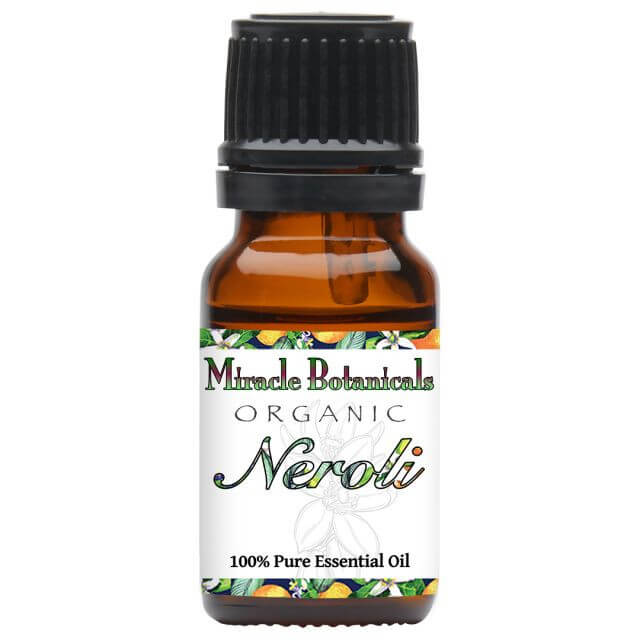
Neroli Essential Oil - Organic (Citrus Aurantium Amara)

$145.00
Botanical Name: Citrus Aurantium Amara Plant Part: Orange Blossoms Method of Extraction: Steam Distilled Country of Origin: Morocco Color/Consistency: Yellow-Orange Color with Thin Consistency Aroma: Powerful and Refreshing with Sweet, Floral and Citrusy Notes Perfumery Note: Middle Main Chemical Components:… read more

General Information for Neroli Essential Oil:
Botanical Name: Citrus aurantium
Botanical Family: Rutaceae
Derived From: Flower blossoms of the orange tree
Method of extraction: Steam distillation of blooming flowers
Aroma: Valued for its aroma alone, the aroma of Neroli imparts a highly radiant, sweet, floral scent. Can be worn alone as perfume.
Physical Description: The oil is a thin consistency with a dark orange to light brown color. Aroma is strong and lasting a little goes a long way.
Blends well with: Bergamot, Chamomile Roman, Frankincense, Geranium, German Chamomile, Grapefruit, Jasmine, Juniper Berry, Lavender, Lemon, Mandarin, Melissa, Rose, Sandalwood Mysore, Ylang Ylang