Table of Contents
Among the world's most treasured essential oils, Helichrysum italicum holds a truly special place. Revered by herbalists, aromatherapists, and natural skincare formulators alike, it has earned a reputation for supporting healthy skin, promoting comfort following bumps and bruises, and bringing a remarkable sense of emotional resilience through its warm, herbaceous aroma.
Yet one fascinating aspect of Helichrysum is often overlooked:
Not all Helichrysum italicum essential oils are chemically identical.
Just as wine reflects the vineyard where the grapes were grown, essential oils reflect the climate, soil, elevation, rainfall, and growing conditions of the plants from which they are distilled. Two oils may share the same botanical name while possessing remarkably different aromatic personalities and chemical profiles.
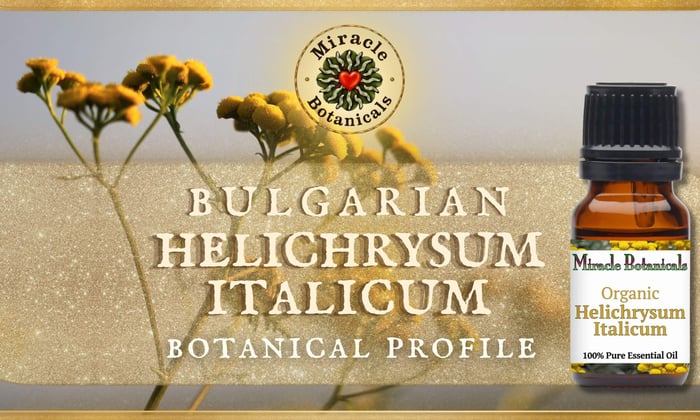
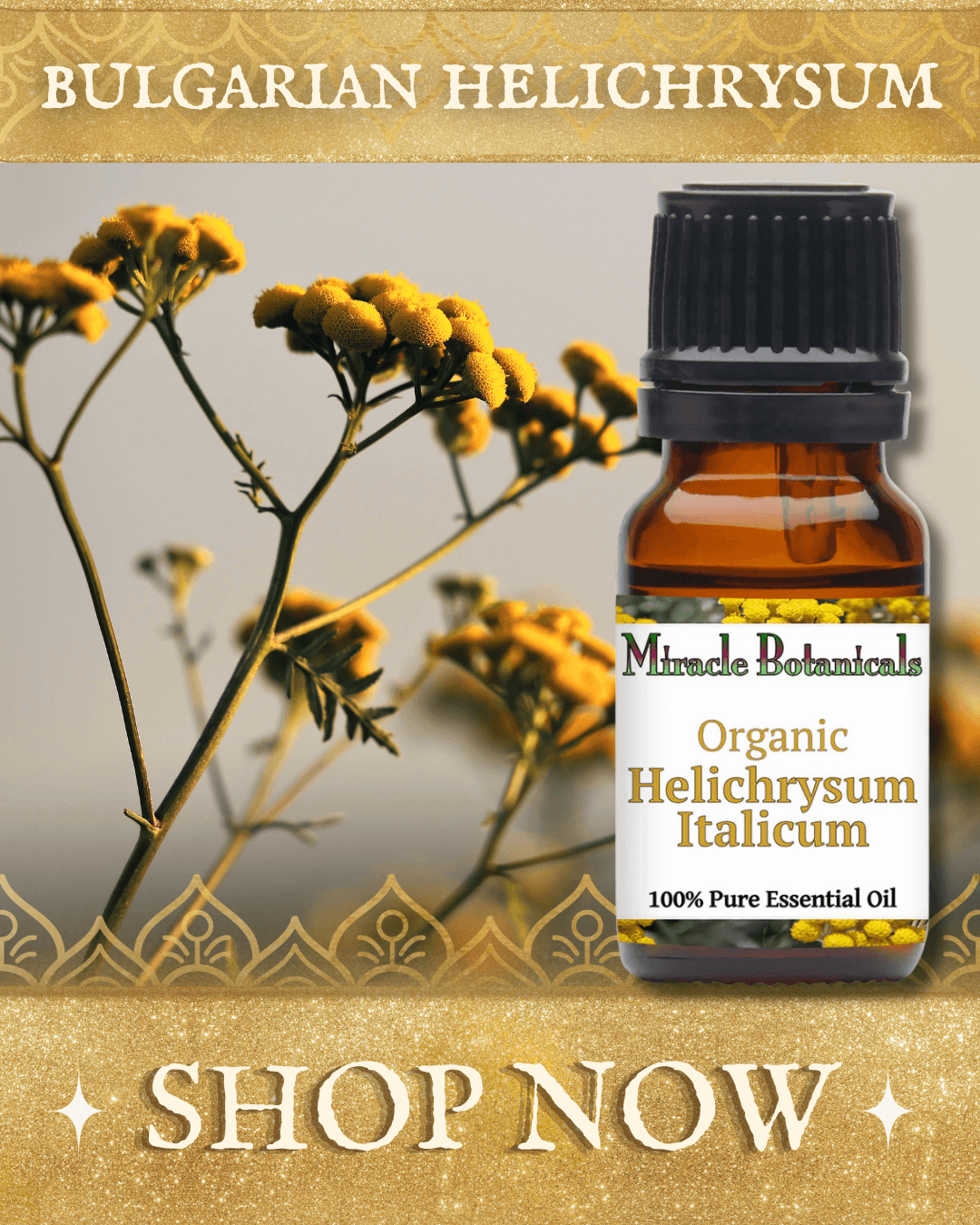
Our new Bulgarian Helichrysum Italicum Essential Oil is a beautiful example of this diversity.
While our Corsican Helichrysum remains one of our most sought-after oils for premium skincare, this Bulgarian-grown expression offers a fresh perspective on the same remarkable species—one that is greener, more resinous, and wonderfully suited for everyday aromatherapy, massage blends, and body care.
The Beauty of Botanical Diversity
Bulgaria has become well known for producing exceptional aromatic plants.
Its combination of mineral-rich soils, warm sunny days, cool evenings, and traditional steam distillation creates essential oils with impressive
complexity and character.
Rather than asking which Helichrysum is "best," a better question is:
What does this particular Helichrysum have to offer?
In the case of our Bulgarian oil, the answer lies within its chemistry.
A Chemistry Rich in Fresh, Resinous Terpenes
Our latest GC-MS analysis reveals three particularly noteworthy constituents.
α-Pinene — 20.69%
The first thing that stands out is the exceptionally high concentration of α-Pinene.
This familiar monoterpene is also abundant in Frankincense, Pine, Fir, Spruce, Cypress, and Rosemary, contributing the crisp, forest-like freshness many people immediately recognize.
Modern research has investigated α-pinene for its potential role in supporting:
healthy inflammatory responses
respiratory wellness
antioxidant activity
microbial balance
From an aromatic perspective, α-pinene gives this Helichrysum a noticeably greener, brighter personality than sweeter Mediterranean expressions. It feels fresh, invigorating, and quietly grounding all at once.
For massage therapists and aromatherapists, this chemistry makes the oil especially attractive in blends designed for active bodies, post-exercise massage, and everyday physical comfort.
γ-Curcumene — 16.27%
The second defining constituent is γ-Curcumene, a sesquiterpene found throughout several medicinal aromatic plants.
Researchers continue exploring γ-curcumene for its antioxidant properties and its potential role in supporting healthy inflammatory pathways.
Aromatically, it contributes warmth, depth, and the unmistakable herbaceous character that Helichrysum lovers appreciate.
Together, α-pinene and γ-curcumene create an essential oil that feels both refreshing and deeply rooted—bright enough to awaken the senses while retaining the earthy richness that makes Helichrysum so beloved.
β-Caryophyllene — 5.33%
Another notable constituent is β-Caryophyllene.
Unlike many essential oil constituents, β-caryophyllene has attracted considerable scientific interest because of its interaction with the body's CB2 receptors, part of the endocannabinoid system involved in maintaining balance throughout the body.
Because of this unique relationship, β-caryophyllene continues to be studied for its potential role in supporting physical comfort and healthy inflammatory function.
It is also found in Black Pepper, Copaiba, Clove, and several other highly respected botanical oils.
Still Distinctly Helichrysum
Although the chemistry differs from our Corsican offering, this is unmistakably Helichrysum italicum.
Our analysis also identifies:
Neryl Acetate — 8.03%
Italicene — 3.86%
Italidione II — 4.82%
Selenene (α+β) — 10.01%
These constituents contribute to the oil's characteristic warm, herbaceous aroma while reinforcing the botanical fingerprint that has made Helichrysum one of aromatherapy's most respected essential oils.
Rather than viewing these differences as better or worse, it's more accurate—and more exciting—to see them as different expressions of the same remarkable plant.
What Does This Mean in Practice?
For many people, chemistry is interesting—but how does it translate into everyday use?
Because of its fresh, resinous profile, this Bulgarian Helichrysum is particularly enjoyable in:
massage oils
post-exercise body oils
respiratory diffuser blends
outdoor adventure blends
botanical first-aid kits
everyday aromatherapy
Its bright conifer-like freshness also pairs beautifully with oils such as:
| Frankincense | Black Spruce | Cypress | Lavender | Rosemary | Copaiba | Blue Tansy |
The result is an aroma that feels both restorative and uplifting.
A More Accessible Helichrysum
One of the most exciting aspects of this new offering is that it allows more people to experience Helichrysum italicum without the premium price often associated with Corsican material.
For those discovering Helichrysum for the first time, it offers an approachable introduction to one of aromatherapy's most fascinating plants.
For longtime enthusiasts, it provides an opportunity to experience how beautifully a single species can express itself under different growing conditions.
An Oil That Invites Exploration
One of the greatest joys of aromatherapy is realizing that plants are never static.
They respond to sunlight, rainfall, soil, elevation, and season. These subtle influences shape the chemistry of the finished essential oil, giving each harvest its own unique personality.
Our Bulgarian Helichrysum Italicum reminds us that nature rarely produces exact copies. Instead, it offers endless variations on a familiar theme.
Fresh yet warm.
Resinous yet floral.
Grounding yet uplifting.
Whether you're blending massage oils, creating botanical body care, exploring the chemistry of essential oils, or simply looking for an exceptional everyday Helichrysum, this Bulgarian expression offers remarkable quality, fascinating chemistry, and outstanding value.
Sometimes the greatest discoveries in aromatherapy aren't entirely new plants—they're new ways of experiencing familiar ones.
FAQs
What is the main difference between Bulgarian and Corsican Helichrysum italicum?
Both are Helichrysum italicum and both are exceptional therapeutic oils, but they express themselves differently because of their growing conditions, climate, soil, and chemistry.
Our Corsican Helichrysum is especially rich in neryl acetate, giving it a sweeter, softer aroma and making it one of our favorite choices for skin regeneration, scars, bruises, and cosmetic formulations.
Our Bulgarian Helichrysum offers a more herbaceous, green aroma with a beautifully balanced chemistry. Many aromatherapists enjoy it for massage blends, inflammation support, respiratory applications, and everyday skin care.
Both are excellent—it's simply a matter of preference and intended use.
Why do Helichrysum oils smell different?
Even though they are the same species, essential oils vary depending on where the plants are grown.
Climate, altitude, soil composition, harvest timing, and distillation methods all influence the final aroma and chemistry.
Bulgarian Helichrysum tends to smell greener and more herbaceous, while Corsican Helichrysum is often softer, sweeter, and slightly honey-like.
Why does the country of origin matter?
Just as wine reflects the region where grapes are grown, medicinal and aromatic plants express the unique conditions of their environment. Soil minerals, elevation, rainfall, sunshine, and climate all influence an essential oil's chemistry and aroma. This concept—known as terroir—is one reason why Bulgarian and Corsican Helichrysum, though the same species, each possess their own distinctive therapeutic character.