


This is the first part of our series based on the e-Book: An Easy Tutorial to Using Essential Oils. We answer the question: What are essential oils?
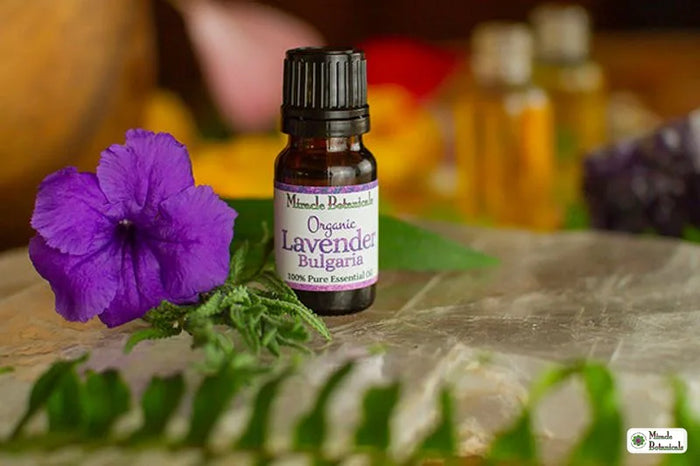
Essential oils are special and powerful substances that give plants their unique aroma. For example, the smell that you already know as lavender is actually the smell of the lavender essential oil that's present in the flowers of the lavender plant (without any synthetic aromas added!).
The name essential oils is a little confusing. Essential oils are essential in the sense that they carry the aroma, or the essence of the plant. This is a different meaning of the word essential than for nutrients such as essential amino acids (in this other context, essential means that our bodies cannot produce the nutrient by themselves).
Also, essential oils are also not really oils in the chemical sense. An oil is composed of fatty acids, and there are no fatty acids in essential oils. Essential oils are called oils because they dont mix with water, and because they are oil soluble.
(Some essential oils are more therapeutic and/or preferable as a Co2 Extract, which is a cold process of extraction that leaves some of the fatty acids intact. We carry both traditional essential oil and Co2 Extracts.)
In nature, essential oils serve many purposes. As I mentioned above, they give the plant its characteristic aroma. For some plants, this attracts beneficial insects that help pollinate the plant, or it drives away pests that might also harm the plant.
But essential oils also have many other uses in plants. One example is that essential oils help the plant defend itself against fungal and bacterial infections (this is part of the reason that essential oils can be so useful for our own health as well).
Essential oils are typically extracted from plants by several different methods. First, there is steam distillation, which has traditionally been the most common method for the extraction of many essential oils. Steam passes through the plant material, and when it condenses, you get the essential oil.
A second popular method for extracting essential oils is called cold pressing. This is a mechanical process of slowly squeezing the plant material to extract the essential oil. Its cold because the squeezing happens slowly enough that the temperature doesn't rise too high to damage the beneficial properties of the oil. Cold pressing is typically used for extracting essential oils from the peels of citrus fruits, such as lemon, orange and grapefruit. Third, there is CO2 extraction. This is a fairly new method uses CO2 instead of steam. Its a cold process that leaves no residue and the end product is thought to be closer to nature than steam distillation. CO2 extraction is a safe and effective way of getting essential oils out of the plant, and its quickly becoming more and more popular.
For more information, check out our blog on How to Use Essential Oils, or contact Hope.