
To tell if essential oil is pure, check what the seller shows you before you buy: the Latin name, origin, extraction method, a GC/MS report for the batch, a believable price, amber glass and any organic certification. No single check proves purity. Together, the seven tell you whether a seller knows what's in the bottle and will show you.
Most checklists stop there. This one also shows what each check can't prove, because good fakes are made to pass the easy tests. For a shortlist, browse these single essential oils with a GC/MS report on every product page, then hold any brand to the same seven checks.
| # | Check | What a good listing shows | Red flag | What it can't prove |
|---|---|---|---|---|
| 1 | Latin name | Genus, species and chemotype if there is one | "Lavender oil" with no botanical name | That the bottle matches the name |
| 2 | Origin | Country, often the region or raw material | No country at all | That the claim is true |
| 3 | Extraction method | Steam distilled, hydrodistilled or cold pressed, stated plainly | No method listed | Anything about additives |
| 4 | GC/MS report | A report tied to the batch on sale | No report, or one undated sheet for every batch | Hidden carrier oil or synthetic copies of natural compounds |
| 5 | Price | Prices that rise with how hard the oil is to make | Rose priced like lavender | Purity (a high price is easy to fake) |
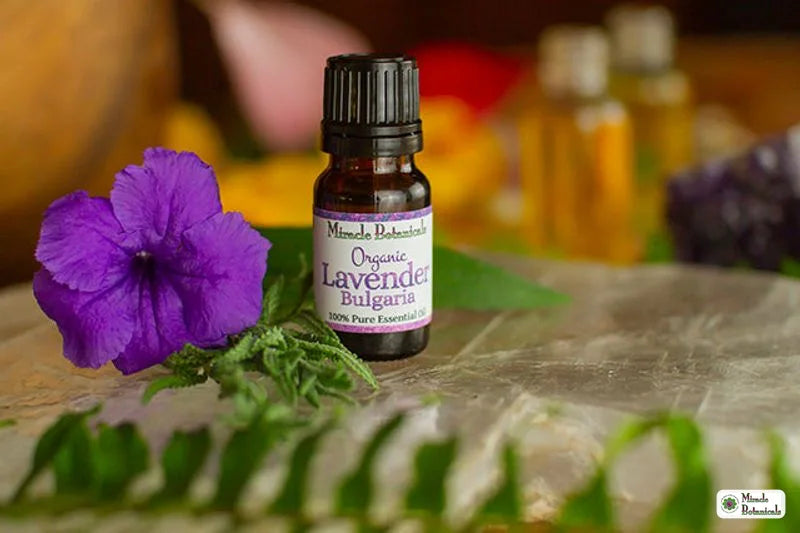
| 6 | Amber glass | Dark amber glass, tight cap | Clear glass | What's inside the glass |
| 7 | Certification | The certifier is named | "Organic" with no certifier | That the oil was tested for adulteration |
What does "100% pure" mean on an essential oil label?
"100% pure" should mean the bottle holds only the named essential oil, with nothing added, taken out or swapped. It's a seller's promise, not a tested standard. The FDA's aromatherapy guidance doesn't define "pure," and the agency says it has no regulations defining "natural" or "organic" for cosmetics.
An essential oil, under the ISO 9235 vocabulary standard, is an extract of one plant made by steam or water distillation, or, for citrus peel, by cold pressing. Solvent-made CO2 extracts and absolutes are separate categories.
Adulteration is any undeclared change: added synthetic aroma chemicals, a cheaper oil or carrier oil stretched in, or a related species passed off as the real thing. A 2021 review in Molecules by Capetti and colleagues says this kind of adulteration "is not uncommon along supply chains."
Purity also matters for your skin. The NAHA safety guidance states that adulterated oils increase the likelihood of an adverse reaction. Before any oil goes on your skin, check an essential oil dilution chart and learn how to patch test an essential oil.
Grading terms don't fill the gap either. No independent body grades essential oils, so read up on what "therapeutic grade" means on an essential oil label before you pay extra for it.
Does the label give the full Latin name?
A pure-oil listing names the genus and species, and the chemotype where one exists. Common names hide real differences. "Lavender" can mean true lavender (Lavandula angustifolia), spike lavender (L. latifolia) or lavandin (L. x intermedia), and each has its own chemistry. The Latin name tells you which one you're paying for.

Species swaps are an old trick. The Capetti review gives lavandin added to lavender as a typical example of cutting an expensive oil with a cheaper relative.
The chemistry gap is real. As of October 2026, the current batch of organic Bulgarian lavender sold here lists linalool at 31.56% and linalyl acetate at 29.25%, while the Spanish spike lavender listing names 1,8-cineole and camphor among its main components.
Some oils need one more word. Rosemary (Rosmarinus officinalis) is sold by chemotype, a chemical type within one species, so "ct. verbenone" and "ct. cineole" rosemary are different oils. Frankincense splits at the species level: Boswellia sacra, B. carterii and B. serrata are different trees. A label reading just "rosemary" or "frankincense" leaves you guessing.
Does the seller say where the oil comes from?
A trustworthy listing names the country of origin, and the better ones name the region or the raw material too. Where a plant grows changes the oil it gives. A seller who can tell you the origin has usually traced the batch back to a producer, and that's a sign the rest of the paperwork exists.
The chemistry backs this up. The Botanical Adulterants Prevention Program's 2024 bulletin on rose oil says the geographic and climatic features of the growing area shape the oil's composition, and it cites research separating Bulgarian from Turkish rose oil by the mirror-image forms (enantiomers) of their compounds. Capetti's team reports that the same kind of data can distinguish tea tree oils by origin.
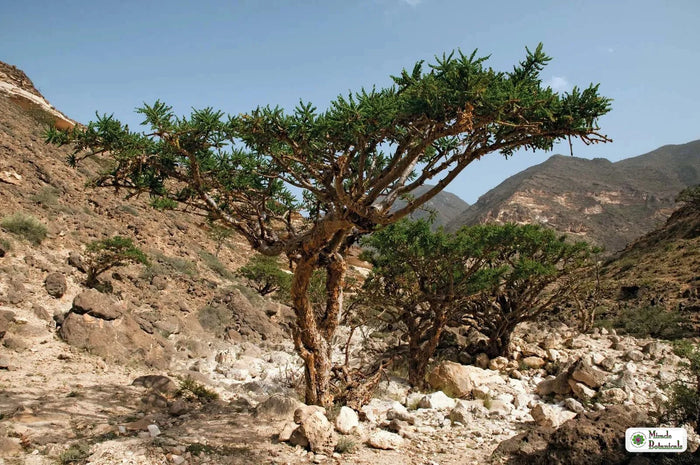
Good origin detail looks like "Hydrodistilled from Green Hojari resin, Oman" or "Kazanlak, Bulgaria (Valley of Roses)," both from live listings here. Still, anyone can type a country name, so origin only carries weight when a test report backs it.
Is the extraction method stated?
Yes, it should be, because the method tells you what kind of product you're buying. Steam distillation, water distillation (hydrodistillation) and cold pressing of citrus peel produce essential oils. Solvent methods produce CO2 extracts and absolutes, which have their own uses but different chemistry, and a listing should name them for what they are.
Rose shows why. Per the BAPP rose bulletin, rose concrete is made by extracting fresh blossoms with hexane, and rose absolute is the ethanol extract of that concrete. A "rose oil" that never says "steam distilled" or "otto" may be an absolute. (Absolutes vs essential oils is a big enough topic for its own guide.)
This site's FAQ states that no absolutes are stocked apart from a food-grade, ethanol-extracted cocoa absolute. The two methods buyers compare most get their own guide: CO2-extracted vs steam-distilled essential oils.
Can you see a GC/MS report for the batch you're buying?
You should be able to, and the report should match the batch on sale. GC/MS (gas chromatography-mass spectrometry) separates an oil's volatile compounds and identifies each one, producing a peak graph and a compound table with percentages. A report from an old batch, or one undated sheet reused for years, tells you little about your bottle.
NAHA's safety guidance tells readers to buy from a reputable supplier who analyzes oils by GC/MS. Miracle Botanicals publishes a GC/MS report on the product page of every single essential oil, and for blends on each ingredient's page, as its FAQ on GC/MS reports explains. The Frankincense Sacra listing, for example, says the lot "was distilled October 2023 and its GCMS report is published on this page," and that report puts alpha-pinene at 66.53%.
What a GC/MS report can miss
A standard report shows each compound as a share of the volatile part, so the numbers add up to about 100%. The Capetti study describes two resulting blind spots.
- Carrier oil. Fatty oils barely register on a standard run, and diluting with them "modifies neither the qualitative composition" nor the normalized percentages. Catching it takes absolute quantitation. One commercial lavender in the study was estimated at 40-50% vegetable oil.
- Synthetic copies. Synthetic linalool is the same molecule as natural linalool. Labs catch it with chiral analysis, because plants make their compounds in typical mirror-image ratios and factories usually don't.
That's why a report works best alongside wider testing. Miracle Botanicals' About Us page says all its oils are "third-party tested to ensure they are free from synthetics, pesticides, and adulteration." To check a report yourself, see how to read a GC/MS report for an essential oil.
Is the price believable for that oil?
A believable price rises with how much plant material and labor the oil takes, so some oils can't be cheap. If a 5 ml (about 1 teaspoon) bottle of "rose oil" costs about the same as lavender, it's diluted, it's an absolute or blend, or it isn't rose. A high price, though, proves nothing by itself.
Rose is the clearest example. The BAPP bulletin puts the yield at roughly 4,000 kg (about 8,800 lb) of flowers for 1 kg of oil, with world prices of about US$7,500-11,000 per kilogram. It also notes that rose oil production covers only about half of demand. In one 2021 study it summarizes, 18 of 32 rose oil samples tested as adulterated.
Here's what honest pricing looks like on a shelf. As of October 2026, 100% pure Bulgarian rose otto sells here for $139.97 per 5 ml, and a 10% dilution in meadowfoam oil sells for $29.97 per 5 ml, labeled as diluted. Organic Bulgarian lavender costs $12.97 for the same size. Dilution isn't the problem. Hiding it is.
So why are some essential oils so cheap? Usually a cheaper species, added synthetics or carrier oil. And since expensive oils pay best to fake, a premium price is exactly where the other six checks earn their keep.
Does the oil come in amber glass?
Pure oil should come in dark amber glass with a tight cap. Amber glass blocks most ultraviolet light, and light is one of the drivers of oxidation along with oxygen and heat. Glass color can't prove what's inside. Clear glass, though, tells you the seller isn't protecting the oil once it leaves the still.
Glass maker Beatson Clark states that amber glass protects contents from ultraviolet light below about 450 nanometers. Robert Tisserand told Discover Magazine in 2023 that "essential oils should always be in amber glass bottles," adding that blue and green glass do a poorer job.
The Tisserand Institute names oxygen, light and heat as the causes of oxidation, and NAHA lists oxidized citrus and pine-family oils among skin sensitizers. A pure oil kept badly becomes a different oil. (Home storage deserves a guide of its own.)
Does an organic certification prove an oil is pure?
No. Organic certification covers how the plant was grown and handled, not whether the oil in the bottle was tested for adulteration. It still carries weight. A USDA organic claim has to be overseen by an accredited certifying agent, so the label points to a real audit trail instead of a marketing word.
The USDA's labeling rules allow the organic seal on products with at least 95% organic ingredients, and its fact sheet for cosmetics and personal care says those labels must display the certifying agent's name. A listing that says "organic" and names nobody is the red flag.
ECOCERT, the French certifier, is also a USDA-accredited certifying agent, per its USDA accreditation certificate. For what each certification does and doesn't guarantee, see organic vs non-organic essential oils.
Can you test essential oil purity at home?
Not reliably. Home tests can hint at one kind of adulteration, carrier oil dilution, and they miss the rest. Synthetic aroma chemicals and swapped species pass the paper test and the freezer test, while some genuine oils fail them. Treat a home test as a curiosity, not a verdict, and lean on batch test reports instead.

The paper test
The idea: a drop of pure oil on white paper evaporates, while carrier oil leaves a greasy ring. The Aromatic Plant Research Center ran an informal side-by-side trial in 2021, written up as The Paper Test. Lavender cut with 10% carrier oil was still visible after 24 hours, so the test caught that. Lavender spiked with synthetics evaporated about as fast as pure lavender. Genuine vetiver, a heavy oil, never fully evaporated, and grapefruit left a faint orange tint.
The freezer test
The idea: chilled, a pure oil stays liquid while a carrier-cut oil clouds or sets. But some pure oils set on their own. Anise seed oil listed here is 89.12% (E)-anethole, and anethole melts at about 70°F (21°C) according to PubChem, so a genuine bottle can turn solid in a cool room. Rose otto contains waxy compounds called stearoptenes, and the BAPP bulletin lists the congealing point as a quality marker. Neither test can tell a natural compound from its synthetic twin.
Which check should you make first?
Make the GC/MS report your first check, because it's the only one that shows the oil's chemistry, then confirm the Latin name on the label matches it. If a seller can't show a report for the batch on sale, the other six checks can't make up for it. Price, glass and certification then show how carefully the oil was handled.
Miracle Botanicals, a small family-run supplier on Hawai'i's Big Island, puts that report on every single-oil listing, so you can run all seven checks before you add anything to your cart.