

CO2-extracted and steam-distilled essential oils differ in the solvent and the heat used to make them. Steam distillation runs steam at about 100 °C (212 °F) through the plant and keeps only the volatile aromatic molecules. CO2 extraction uses pressurized carbon dioxide at lower temperatures and can also pull heavier molecules, so the same plant gives two different products.
Neither method makes an oil pure or impure. Extraction method is one of the label checks in our guide on how to tell if an essential oil is pure, and this page takes that one check further, with two frankincense oils from the same species as the worked example. Cold pressing, solvent extraction and enfleurage are outside this comparison.
How does steam distillation make an essential oil?
Steam distillation passes steam through plant material, carries the volatile aromatic molecules out with the vapor, then cools the vapor so the oil separates from the water. Anything too heavy to travel with steam, such as resin acids, waxes and most pigments, stays in the still. That's the method's built-in filter.

Steam distillation also sets the formal boundary of what counts as an essential oil. Under ISO 9235, the international vocabulary for aromatic raw materials, an essential oil is a concentrated, volatile extract from one plant species made by steam or water distillation or, for citrus peels, by mechanical expression (cold pressing). CO2 extracts are made with a solvent, so they're technically a separate category, even though shops usually sell them alongside essential oils.
The trade-off is heat and water, which can change some compounds in the still. German chamomile is the clearest case. Its flowers contain matricin, a colorless compound that breaks down into blue chamazulene during steam distillation (Gabbanini et al., 2024, Molecules). The blue in German chamomile oil is made in the still. A supercritical CO2 extract of the same flowers still contains matricin (Kaiser et al., 2004, Phytochemical Analysis).
What is a CO2 extract?
A CO2 extract is an aromatic extract made with pressurized carbon dioxide as the solvent. The CO2 is pushed through ground plant material, dissolves the aromatic compounds, and turns back into a gas when the pressure is released. It leaves no solvent residue, and because extraction runs well below boiling point, heat-sensitive compounds survive.

A 2013 review in Molecules describes CO2 as odorless, nonflammable and recyclable, and notes that supercritical extraction limits thermal degradation compared with distillation (Capuzzo et al., 2013). Published runs on frankincense resin in that review used 40-60 °C (104-140 °F).
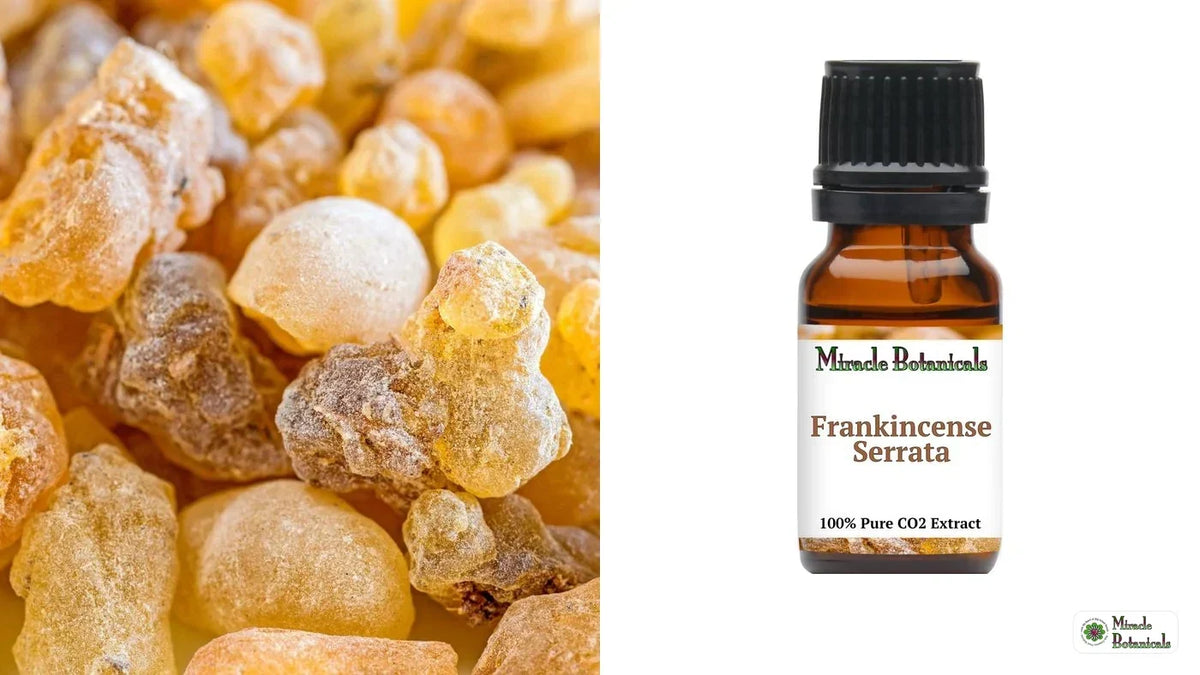
You won't always spot the difference on the bottle, so read the listing. Miracle Botanicals' FAQ on extraction methods and GC/MS reports says its oils are extracted by steam distillation or carbon dioxide and that each product description states which. The CO2-extracted Frankincense Serrata is one of the CO2 options, and it's the extract used in the comparison further down.
| Steam distillation | CO2 extraction | |
|---|---|---|
| Solvent | Steam (water) | Pressurized carbon dioxide |
| Temperature | About 100 °C (212 °F) | Below 31 °C (subcritical) to about 60 °C (140 °F) |
| What it captures | Volatile compounds only | Volatile compounds, plus heavier ones as pressure rises |
| Solvent left behind | None (water separates off) | None (CO2 returns to a gas) |
| Status under ISO 9235 | Essential oil | Separate category |
| Typical price | Lower | Higher |
What is the difference between supercritical and subcritical CO2 extraction?
Supercritical extraction runs CO2 above its critical point, about 31 °C (88 °F) and 73.8 bar (roughly 1,070 psi), where it behaves partly like a gas and partly like a liquid (NIST Chemistry WebBook). Subcritical extraction stays below that point and uses liquid CO2, which dissolves mainly the lighter aromatic molecules.
Pressure is the main dial. As pressure rises, CO2 gets denser and dissolves bigger molecules, according to the Capuzzo review. That cuts both ways. One sage process in the review needed a chilled separator to drop out plant waxes before it could collect a clean aromatic oil.
Select vs total CO2 extracts
Producers split supercritical extracts into two styles. The Tisserand Institute describes select extracts as generally more similar to essential oils, while total (complete) extracts contain more heavy molecules and could be compared to absolutes (Tisserand Institute). These are trade labels used by producers such as Flavex, not standardized grades.
A total extract of a seed carries the seed's fatty oil too. That's why Miracle Botanicals' Sea Buckthorn Seed CO2 Total Extract sits with its carrier oils rather than its aromatics. If a frankincense or ginger label just says "CO2," the select/total detail is worth asking about, and the CO2 Frankincense Serrata listing doesn't specify either.
Are CO2 extracts stronger than steam-distilled essential oils?
No. A CO2 extract isn't a concentrate of the essential oil. It's a different mix of compounds from the same plant, often richer in heavier molecules the still leaves behind and sometimes poorer in the light, fast-evaporating ones. Whether it's "stronger" depends on what you measure: scent intensity, one particular compound, or how reactive it is.
Frankincense shows one side of it. In a 2018 study of Boswellia serrata resin, the steam-distilled oil had higher concentrations of alpha-thujene, camphene, beta-pinene, myrcene and limonene than the supercritical CO2 oil (Ayub et al., 2018, International Journal of Food Properties). Those are bright top-note monoterpenes, so on that measure the distilled oil is the more concentrated one. The authors found yield and composition varied greatly between methods.
Ginger shows the other side. Ginger CO2 contains gingerols, the compounds behind fresh ginger's bite, and the Tisserand Institute cautions that gingerols tend to irritate skin, one reason to learn how to patch test an essential oil before using any new extract. Advice written for an essential oil doesn't automatically transfer to the CO2 extract of the same plant.
If you apply a CO2 extract to skin, dilute it in a carrier oil just as you would an essential oil, using an essential oil dilution chart. At 1%, that's 3 drops per 10 ml (about 2 teaspoons) of carrier.
How does the aroma of a CO2 extract differ from a steam-distilled oil?
A CO2 extract usually smells rounder and lasts longer on a scent strip, because it can hold heavier, slower-evaporating molecules and skips the long contact with hot water. A steam-distilled oil tends to open brighter and fade sooner, since distillation favors the lightest volatile compounds. Neither is better; they suit different blends.

You can check this at home without any equipment. Put one drop of each oil on separate strips of plain paper, label them, and smell at 5 minutes, 1 hour and 4 hours. The first sniff tells you about top notes. The 4-hour sniff tells you how much heavy material each one carries.
Don't expect the label to describe the difference for you. Aroma notes on product pages are the seller's own words, so treat them as a starting point and trust your strip test over adjectives.
How does CO2 frankincense compare with steam-distilled frankincense?
The two Frankincense Serrata listings show the split in numbers. Both are Boswellia serrata resin from India. The steam-distilled oil is dominated by alpha-thujene at 69.24%. The CO2 extract has less alpha-thujene, 46.5%, plus 12.5% serratol/incensol, heavier diterpene alcohols that don't appear in the distilled oil's top three.
| CO2-extracted Frankincense Serrata | Steam-distilled Frankincense Serrata (organic) | |
|---|---|---|
| Species and part | Boswellia serrata resin | Boswellia serrata resin |
| Origin | India | India |
| Method on listing | CO2 extracted (supercritical or subcritical not stated) | Steam distilled |
| Top listed constituents | alpha-thujene 46.5%, serratol/incensol 12.5%, alpha-pinene 4.1% | alpha-thujene 69.24%, sabinene 6.10%, alpha-pinene 5.51% |
| Color and consistency | Clear to golden, thin | Clear to yellow, thin |
| Seller's aroma notes | Spicy, musky; green, peppery resin with a light citrus edge | Fresh, spicy, musty, slightly sweet |
| Price for 10 ml (checked October 2026) | $23.97 | $18.97 |
Read the table as two batches, not two fixed recipes. Each figure comes from one listing's report, and resin chemistry varies from harvest to harvest. If you want to check figures like these yourself, here's how to read a GC/MS report for an essential oil.
Do CO2 frankincense extracts contain boswellic acids?
Only in traces. Boswellic acids are the heavy, non-volatile triterpenic acids of frankincense resin. Robert Tisserand found no reliable report of them in frankincense oil distilled under normal conditions, and notes that Flavex describes its B. serrata CO2 extract as containing traces (Tisserand Institute).
There's a testing catch here. Boswellic acids don't show up on GC/MS at all, because the method only detects compounds that vaporize; HPLC is needed to find them. So a GC/MS report can't confirm or rule them out. If a seller markets a frankincense CO2 on its boswellic acid content, ask for an HPLC result.
Should you choose a CO2 extract or a steam-distilled oil?
Choose by purpose. Pick the steam-distilled oil when you want the classic bright aroma for diffusing or a lower price per ml. Pick the CO2 extract when you want deeper, longer-lasting base notes in a blend or perfume, or compounds that distillation leaves behind or changes. For frankincense, both are honest choices.
Expect to pay more for CO2. At the prices above, the CO2 Frankincense Serrata costs about 26% more per 10 ml than the distilled one ($2.40 vs $1.90 per ml). The Capuzzo review explains part of the gap: the high-pressure equipment is costly to build and run.
Before you buy either, check four things on the listing: the Latin name, the stated extraction method, select or total for a CO2 extract, and a compound table you can compare against the other version.
Treat a CO2 extract as its own material with its own compound profile, not an upgraded essential oil. If a listing won't tell you how the oil was made or show you what's in it, keep looking.