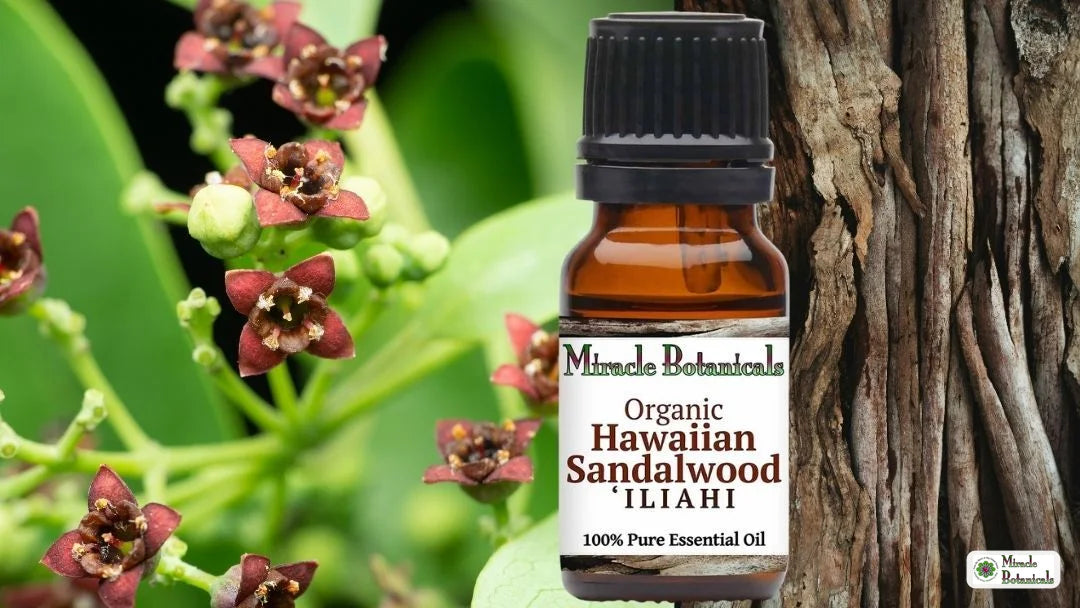

The difference between organic and non-organic essential oils is how the plant was farmed and handled, not what ends up in the bottle. Certified organic oils come from crops grown and handled under an annually inspected standard that bans most synthetic pesticides and fertilizers. Non-organic oils skip that audit. Neither label proves an oil is pure.
Organic status is one of the seven checks in our guide on how to tell if an essential oil is pure. It's also the check most easily mistaken for a purity guarantee.
What is the real difference between organic and non-organic essential oils?
Organic and non-organic essential oils can be the same species, from the same region, distilled or pressed the same way. The difference is verification. An organic oil comes from a farm and supply chain that a certifier has inspected against a written standard. A non-organic oil hasn't been through that audit, which isn't proof that anyone sprayed it.

That gap cuts both ways: some uncertified farms never spray but skip certification over its cost and paperwork, while others spray routinely. Wild-harvested oils are a separate case for another article.
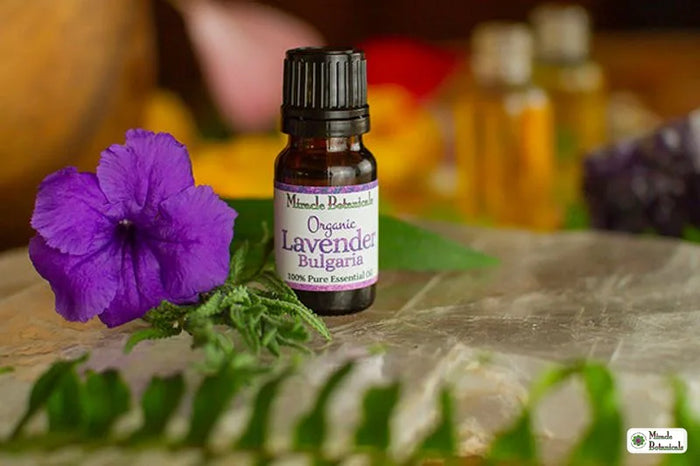
If you'd rather have the audit trail, Miracle Botanicals stocks USDA and ECOCERT certified organic essential oils next to its conventional and wild-harvested oils, and every single oil has a GC/MS report on its product page.
What does the USDA organic seal on an essential oil actually require?
The USDA organic seal means an accredited certifier has checked the oil's production against 7 CFR Part 205, the National Organic Program rules. The field must have had no prohibited substances applied for 3 years before harvest. Synthetic inputs are banned unless the National List allows them, and genetic engineering, irradiation and sewage sludge are off the table.
Essential oils qualify because they're made from agricultural ingredients. As USDA's fact sheet on cosmetics and personal care products explains, the FDA doesn't regulate "organic" on cosmetics; USDA regulates it for agricultural products, and the grower, every handler and the final manufacturer must all be certified.
The four USDA organic label categories
| Label wording | Organic content (excluding water and salt) | USDA seal allowed? |
|---|---|---|
| "100% organic" | 100% | Yes |
| "Organic" | At least 95% | Yes |
| "Made with organic (up to 3 named ingredients)" | At least 70% | No |
| Organic ingredients flagged in the ingredient list only | Under 70% | No |
Sources: 7 CFR 205.301 and the USDA fact sheet. The top three tiers must name the certifier.
A single essential oil normally lands in the top two rows; blends are where the tiers bite. Take a 10 ml roller at 1%, a common strength on our essential oil dilution chart: 3 drops (0.1 ml) of certified organic lavender in a non-organic carrier. That roller sits in the bottom row, so its front label can't say "organic" at all.
How compliance gets checked
Certifiers inspect every operation on site each year, and at least 5% of the operations they certify must get an unannounced visit annually. They also residue-test samples from at least 5% of their operations every year. If a test finds a prohibited substance above 5% of the EPA tolerance, the product can't be sold as organic.
Imports got stricter too. Since March 19, 2024, USDA's Strengthening Organic Enforcement rule has generally required brokers and traders to be certified and organic imports to carry an NOP Import Certificate. That covers oils pressed or distilled abroad, such as an Argentinian lemon or a Bulgarian lavender.
What is ECOCERT certification, and how does it relate to USDA organic?
ECOCERT is a certification body, not a single standard. Founded in France in 1991, it inspects operations against several rulebooks, and one of them is USDA organic: ECOCERT SAS has held USDA accreditation as a certifying agent since April 29, 2002. The logo tells you who inspected. The standard behind it still needs checking.
The company also certifies to COSMOS, a private cosmetics standard it co-developed. Per ECOCERT's COSMOS page, a COSMOS ORGANIC product needs 95% of its plant ingredients organic but only 20% organic content across the whole formula (10% for rinse-off). USDA doesn't regulate private standards like this, so read the words beside an ECOCERT logo: USDA organic, EU organic and COSMOS promise different things.
What doesn't organic certification guarantee?
Organic certification doesn't analyze what's in the bottle. Inspectors audit land, inputs, records and the chain of custody; they don't run a composition test on each batch. A certified oil can still be cut with a cheaper oil, oxidized by poor storage, or chemically off because of a poor harvest year. Certification and purity testing answer different questions.
Purity is a lab question, answered by GC/MS; our guide on how to read a GC/MS report for an essential oil walks through one. The catch, as chemist Alex St-Gelais explains for the Tisserand Institute, is that a standard GC-MS composition test can't tell organic oil from non-organic. Pesticide screening is a separate, targeted analysis.
Organic doesn't mean residue-free either. The same article notes that an organic label means the farmer didn't use pesticides willingly, not that none are present, and USDA requires buffer zones against drift from neighboring farms.
Chemistry sits outside the standard too. An oil's makeup shifts with harvest time, origin, soil, climate and distillation, as aromatherapist Jade Shutes notes in a NAHA journal article. Nor does organic farming slow oxidation once a bottle is open; storage is a topic of its own.
Skin reactions depend on an oil's chemistry, age and dose, so how to patch test an essential oil applies to a certified bottle exactly as to any other. And unlike "organic", "therapeutic grade" has no independent definition; see what "therapeutic grade" means on an essential oil label.
Do non-organic essential oils contain pesticides?
Some do, and cold-pressed citrus peel oils carry the clearest risk. Citrus peel is the sprayed surface of the fruit, and the oil is pressed straight out of it, so residues concentrate. Steam-distilled leaf, flower and root oils have much thinner published residue data, and the Tisserand Institute notes pesticides generally appear in essential oils at very low levels.
The numbers explain the citrus problem. A 2009 Journal of Agricultural and Food Chemistry paper (Nichkova et al.) notes that orange oil is cold-pressed from peel at 0.3-0.5% yield by weight, roughly 200 to 330 kg (about 440 to 730 lb) of peel per kilogram of oil. It also cites a US EPA processing factor of 19 for the insecticide zeta-cypermethrin: residue ends up about 19 times more concentrated in the oil than on the fruit.
Surveys agree. A 2012 Brazilian study of 15 commercial citrus oils found organochlorine or organophosphorus residues above Codex Alimentarius limits in 6. An Italian-led survey of 190 citrus oils from the 2006-2007 crop found the largest quantities in oils from Brazil and Spain, though levels were falling. Both are over a decade old, so they show where the risk sits, not what's in today's bottle.
When does choosing organic matter most?
Organic matters most for cold-pressed citrus peel oils such as lemon, sweet orange, lime, grapefruit and bergamot, because residues on the peel go straight into the oil. It's also worth the premium for oils you use on your skin most days. For steam-distilled oils from a supplier that publishes batch test results, organic is a smaller, optional upgrade.

| Your situation | Organic worth it? | Why |
|---|---|---|
| Cold-pressed citrus peel oil | Yes, first priority | The sprayed peel is the raw material |
| Oil you use on skin most days | Usually | More frequent exposure to any residue |
| Steam-distilled oil with a published GC/MS report | Optional | Less residue data; the report covers purity |
| Wild-harvested oil | Look for wild-crop certification | USDA certifies wild crops separately |
| Occasional diffusing, tight budget | Lower priority | A tested, correctly identified oil matters more |
Lemon shows the logic. Miracle Botanicals' organic lemon oil is cold-pressed from peel and sourced from Argentina, which is exactly the case where the organic premium does the most work.
If you buy organic for how the land is farmed, that reason applies to every oil, citrus or not. It's a values call, not a purity one.
How can you check an organic claim before you buy?
Check the label wording, the certifier's name and a batch test report. USDA rules require the certifying agent's name and address on anything labeled "100% organic", "organic" or "made with organic". You can then look up that operation in USDA's Organic Integrity Database and use the GC/MS report to answer the purity question certification leaves open.
- Read the exact wording. Only "100% organic" and "organic" may carry the USDA seal.
- Find the certifier. Look for a "certified organic by" line. With an ECOCERT logo, ask which standard applies.
- Confirm the certificate. Search the company in the Organic Integrity Database, USDA's registry of certified operations.
- Ask for the batch GC/MS report. NAHA's safety guidance recommends suppliers who analyze their oils by GC/MS. Check the Latin name and main constituents against the label.
- Ask what else gets screened. Miracle Botanicals, for instance, states on its About Us page that all its oils are third-party tested to ensure they're free from synthetics, pesticides and adulteration.
Spend the organic premium on citrus peel oils first, where it changes the most. For everything else, a correct Latin name, a batch GC/MS report and a supplier who answers testing questions tell you more than any seal can.