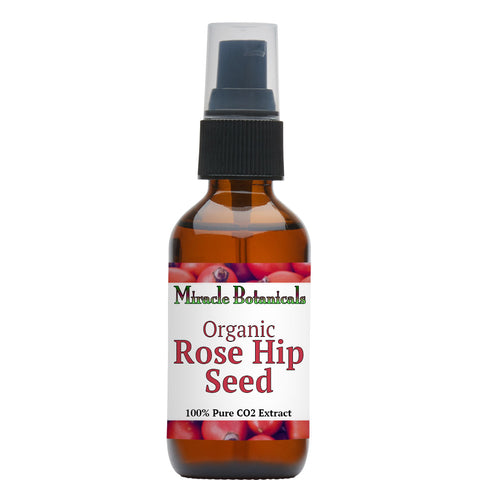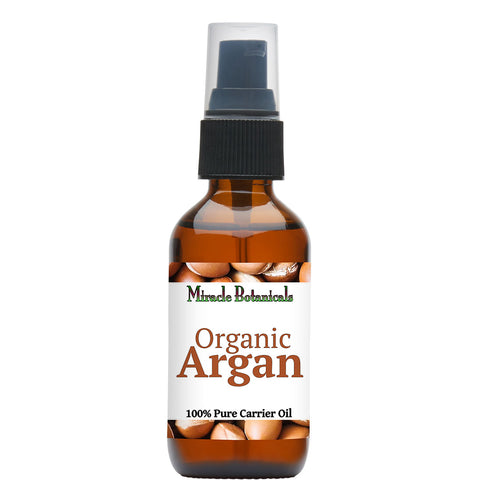



In the rosehip oil vs argan oil choice, fatty acids decide it. Rosehip seed oil is mostly linoleic and alpha-linolenic acid, so it feels light and suits oily or combination skin. Argan oil leads with oleic acid, so it feels richer, keeps longer and suits dry skin. You can also blend the two.
Rosehip and argan are both carrier oils: non-volatile (fixed) plant oils pressed or extracted from seeds or kernels and used to dilute essential oils before they go on skin. That dilution step has its own math, set out in the essential oil dilution chart. For carriers beyond these two, see how to choose the best carrier oil for essential oils.
Any new oil can irritate skin, so try either one on a small area first. The steps in how to patch test an essential oil work just as well for a plain carrier oil.
How do rosehip seed oil and argan oil compare side by side?
Rosehip seed oil is a thin, orange, linoleic-rich oil that oxidizes quickly. Argan oil is a medium-bodied, yellow, oleic-rich oil that holds up better once opened. The table pairs published lab analyses with the specs listed on the two product pages.
| Attribute | Rosehip seed oil | Argan oil |
|---|---|---|
| Source | Seeds of rose hips (product page: Rosa canina, Germany) | Kernels of Argania spinosa (product page: Morocco) |
| Main fatty acids | Linoleic 36-55%, alpha-linolenic 20-26%, oleic 16-22% | Oleic 43-47%, linoleic 33-36%, alpha-linolenic under 0.1% |
| Texture | Light and flowing | Medium consistency |
| Absorption (how it feels) | Sinks in fast, light finish | Slower, more slip on the skin |
| Color | Amber to orange | Yellow |
| Aroma | Mild, nutty | Rich, earthy, nutty |
| Oxidation stability | Low | Moderate to good |
| Best skin type | Oily, combination, normal | Dry, normal |
| Extraction (stocked oil) | CO2 extracted, organic | Cold pressed, virgin, USDA Organic |
Sources: fatty acids from Szentmihályi et al., 2002, Khallouki et al., 2003 and Belcadi-Haloui et al., 2018; everything else from the product pages (checked October 12, 2026). No standardized test compares absorption, so that row reflects texture.
Which oil suits dry, oily or combination skin?
Use your skin type as the decision rule. Start with rosehip seed oil if your skin is oily, argan oil if it's dry, and a blend (or rosehip on the T-zone, argan on the cheeks) if it's combination. Normal skin can take either one, so pick by the texture you like and how quickly you'll finish a bottle.

Oily or breakout-prone skin
Rosehip seed oil is the usual pick. It's thin, it sinks in fast, and its main fatty acid is linoleic rather than oleic. The organic CO2-extracted rosehip seed oil stocked here is a Rosa canina oil from Germany. Use it sparingly at first, two or three drops at night.
Pores are their own question, with their own scoring system. The guide to the comedogenic rating of carrier oils explains those scores and their limits.
Dry skin
Argan is the easier everyday oil here. Its medium body gives dry patches more cushion, and because it leads with oleic acid and has almost no alpha-linolenic acid, an opened bottle stays fresh longer. The virgin USDA Organic argan oil from Morocco sold here is cold pressed. Rosehip isn't off-limits for dry skin, but its thin texture works better as an add-in than as the main oil.
Why do rosehip and argan oil feel so different on skin?
Double bonds explain most of it. Rosehip seed oil is more than 60% polyunsaturated fat, mainly linoleic and alpha-linolenic acid, which keeps it thin and quick to sink in. Argan oil's biggest share is oleic acid, a monounsaturated fat, with linoleic acid second. Vitamin E, a common selling point, lands in a similar range in both.
Every rosehip sample in the 2002 study, across five extraction methods, was over 90% unsaturated. The unroasted argan sample in the 2018 study, by contrast, was about 19% saturated fat.
Does that matter on skin? A 2017 review in the International Journal of Molecular Sciences summarizes research linking linoleic acid to the skin's water barrier, and work showing that free oleic acid can disrupt that barrier. Read that as background, not a verdict. Those findings concern free fatty acids, while the fatty acids in bottled oil are mostly bound up as triglycerides, and no study reviewed here compared the two oils on faces.
Vitamin E is the surprise. A 2018 analysis of Rosa canina seed oil measured 472 mg/kg of gamma-tocopherol; Khallouki's argan samples averaged 483 mg/kg. Different labs and samples, so call it a rough tie.
The minor compounds are where the oils part ways. Argan carries squalene (about 313 mg per 100 g in Khallouki's samples) plus two uncommon plant sterols, schottenol and spinasterol. Rosehip carries carotenoids, 218.8 mg/kg in the 2018 sample, which give it the orange color.
What is CO2-extracted rosehip oil?
CO2-extracted rosehip oil is seed oil pulled out with pressurized carbon dioxide instead of a screw press or a chemical solvent. When the pressure drops, the CO2 turns back into a gas, so the oil comes out solvent-free. The method doesn't change what rosehip oil is, but it does change how much of the seed's color comes through.
A CO2 extraction runs either supercritical, above CO2's critical point of 31.1 °C (88 °F) and 73.8 bar (about 1,070 psi), or subcritical, below it. In Szentmihályi's study, subcritical extraction gave the highest carotene level of the methods tested, 145.3 μg/g, while supercritical extraction gave the lowest, 36.3 μg/g, roughly a fourfold gap.
A label that says only "CO2 extracted" won't tell you which process was used, and the product page for this oil doesn't specify. Its amber-to-orange color is a rough clue that carotenoids came through. On purity, Miracle Botanicals, a small family-run supplier on Hawai'i's Big Island, states that all of its oils are third-party tested for synthetics, pesticides and adulteration.
Aromatic CO2 extracts get their own comparison in CO2-extracted vs steam-distilled essential oils.
Does rosehip oil really contain tretinoin?
Some rosehip oil appears to contain all-trans-retinoic acid, the compound sold by prescription as tretinoin, but the evidence is narrow. One peer-reviewed study detected it in Chilean Rosa rubiginosa seed oil. Nothing reviewed for this article measured it in CO2-extracted Rosa canina oil or showed it acting like a prescription retinoid on skin.
That study, by Concha and colleagues (2006) in the Journal of the American Oil Chemists' Society, reported 700% more all-trans-retinoic acid in cold-pressed oil than in solvent-extracted oil. The abstract gives no concentration, and the species and process differ from the oil discussed here.
So don't buy rosehip seed oil as a stand-in for a prescription retinoid. If you already use one, ask the dermatologist who prescribed it before layering oils on top.
What has research found about each oil on skin?
Argan oil has a couple of small trials in postmenopausal women behind it, and rosehip seed oil has less. In a 2015 trial, 60 postmenopausal women applied argan oil to one forearm daily for 60 days, and elasticity readings on that forearm rose.
In that argan trial by Boucetta and colleagues, half the women ate argan oil and half ate olive oil, while everyone applied argan oil to the left forearm. All three elasticity measures (R2, R5, R7) improved on the treated arm. The limits: forearm skin, not faces, and no comparison oil on the skin.
For rosehip, the 2017 review could point to one topical study, from 1967, which paired the oil with oral fat-soluble vitamins, so the oil's own contribution can't be separated out.
Can you mix rosehip and argan oil?
Yes. Both are fixed plant oils, so they blend with a shake and stay mixed. A 1:1 blend gives a medium texture and cuts the alpha-linolenic share, the most oxidation-prone part of rosehip, roughly in half. Shift the ratio toward rosehip for oilier skin or toward argan for drier skin.

For a 10 ml (about 2 teaspoon) amber glass dropper bottle:
- Combination skin: 5 ml rosehip + 5 ml argan
- Dry skin: 3 ml rosehip + 7 ml argan
- Oily skin: 7 ml rosehip + 3 ml argan
The math: rosehip carries 20-26% alpha-linolenic acid and argan under 0.1%, so a 1:1 blend lands around 10-13% and the dry-skin ratio around 6-8%. A blend is sturdier than straight rosehip but less sturdy than straight argan, so mix small batches and date the bottle. Adding essential oils? Count drops against the full blend volume.
Which oil goes rancid faster?
Rosehip seed oil. Fatty acids with more double bonds react with oxygen faster, and rosehip is full of them. In a 2018 lab test, rosehip seed oil lasted 3.46 hours in a Rancimat stability test at 110 °C (230 °F) and broke down rapidly when stored under UV light. Argan's oleic-led profile resists oxidation better.
How big is the gap? A 1980 study in Lipids measured oleate, linoleate and linolenate esters oxidizing at relative rates of roughly 1 to 10 to 22. Rosehip's two main fatty acids sit at the fast end of that scale; argan's main one sits at the slow end.
Argan isn't immune, though. A 2014 Rancimat study found that cosmetic argan oil, pressed from unroasted kernels, stores much less well than culinary argan from roasted kernels. The argan product page doesn't say whether its kernels were roasted.
Keep both oils capped, out of light and away from heat, light above all for rosehip. How many months each lasts, and how to tell when one has turned, is covered in the guide to carrier oil shelf life.
So which oil should you try first?
If you're torn, start with argan. It forgives a bottle that takes months to finish, and you can add rosehip later once you know how your face handles an oil at all. The exception is clearly oily skin, where rosehip's lighter feel makes it the better first bottle, bought in a size you'll finish quickly.