Love the earthy, almost cedar like
Love the earthy, almost cedar like cypress smell.


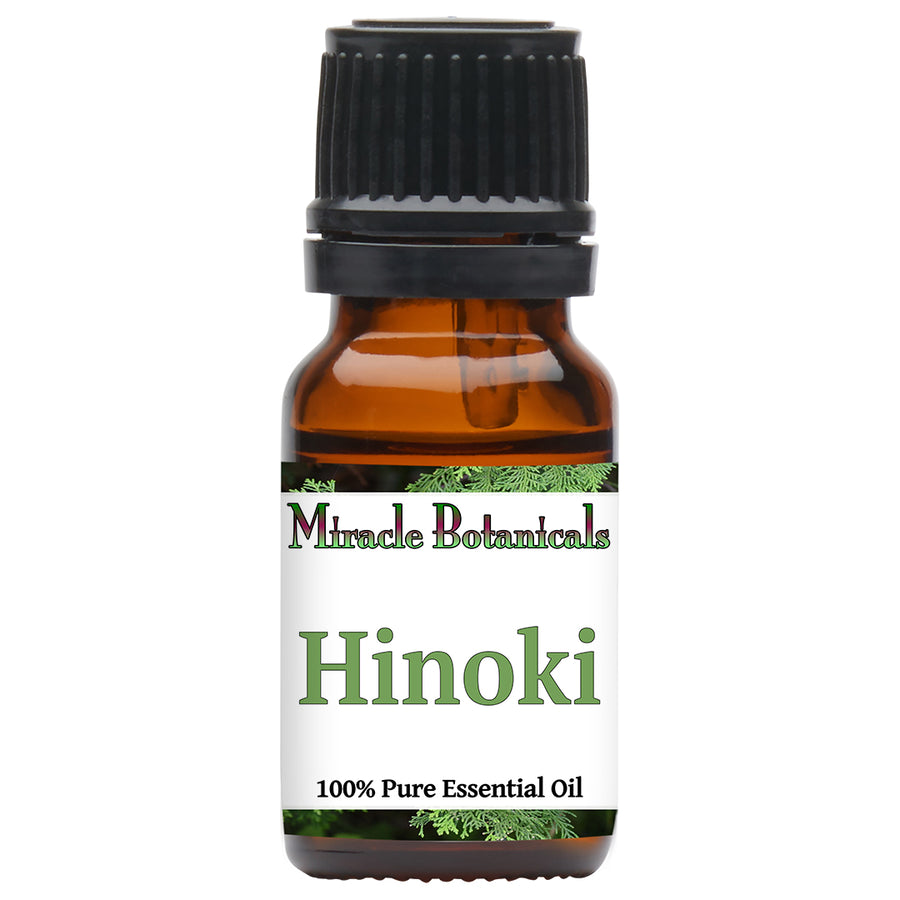

Hinoki is the bath tub wood of Japan, and a few drops in the water bring that scent into an ordinary bathroom. Blend the drops into a little carrier oil first so they spread through the water instead of floating. The scent is the point, the same dry wood that fills a bath house.
In a diffuser, hinoki wood oil smells like a cedar forest after rain, and to our nose it runs softer than cypress, without the sweetness some woods carry. It carries a room without shouting, which is why it suits a workspace as much as a room at home. Start with a few drops.
The bright opening of hinoki comes from alpha-Pinene, and the part that stays comes from tau-Muurolol and delta-Cadinene, two heavier sesquiterpene compounds. The citrus top fades first and the wood stays. On a wood block or a cotton pad the wood is still there long after the citrus has gone.
Hinoki wood oil holds a blend together, keeping lighter citrus notes in place while adding a dry wood of its own. Perfumers use it where other woods run too sharp or too sweet. A drop or two in a citrus accord changes the whole character of it.
Our hinoki is Middle Honshu wood oil with three named constituents, alpha-Pinene, tau-Muurolol and delta-Cadinene, which is the fastest way to tell it from a bottle that only borrows the name. A hinoki label rarely says what went into the still, yet the oil changes with it. It belongs with the rare oils we stock for people who know the difference.
Mixed into a carrier oil, hinoki makes a quiet personal scent that reads as clean wood rather than perfume. It suits people who find other woods too sweet or too sharp, and it sits close to the skin without turning powdery. By evening what's left is the dry wood, and nothing else.
Start with 3 to 5 drops in a water diffuser for a medium room, then add a drop at a time until the room smells right to you. Hinoki carries well, so a little goes a long way. Diffuse for 30 to 60 minutes, then give the room a break for the same time, with some fresh air moving.
Dilute hinoki to 1 to 2 percent before it touches skin, which is 6 to 12 drops in 30 ml of a carrier like Hawaiian kukui nut oil. Keep to 3 to 6 drops per 30 ml for the face. Patch test a small spot on the inner forearm and wait a day before wider use. We don't apply this oil neat, and it stays out of reach of children.
Stir 4 to 6 drops into a tablespoon of carrier oil or an unscented bath oil, then add it to the water once the tub is full. Oil and water don't mix on their own, so the carrier is what lets the drops reach your skin diluted, not neat. Swirl the water and get in.
Tap a recipe to see the full formula and method.
Method. Add the drops to a water diffuser and run it for 30 to 60 minutes. The bergamot lifts the top and the fir sharpens the green edge, so the hinoki sits underneath as the wood.
Method. Stir the drops into the kukui oil, then pour it into a full tub and swirl before you get in. The lavender rounds off the wood without covering it. Rinse the tub after, since oils leave a film.
Method. Mix the drops into the kukui oil in a small bottle and roll it between your palms before use. Apply to the shoulders and the back of the neck, where the wood sits close without carrying across a room. Keep it capped and out of sunlight, and use it within a few months.
At 26.27% this batch is dominated by alpha-Pinene — a monoterpene found in conifer and rosemary oils, hinoki's main constituent. tau-Muurolol sits at 13.58%, delta-Cadinene sits at 10.94%. The oil is clear with straw hue and thin consistency, and it reads as a top note in a blend.
Every size is the same oil. The larger the bottle, the lower the price per ml.
7 answers drawn from the product specification and our own use of this oil.
Love the earthy, almost cedar like cypress smell.
Amazing product Beautiful crisp clean scent. Light lemon grass like start, ending in a rosewood mingling with teak finish. A little goes a long way. I blend it with rose and it makes a perfect summer scent.