

"Therapeutic grade" is a marketing term, not a certification. No government agency or independent body grades essential oils, so the meaning of therapeutic grade essential oils depends entirely on the company printing it. A seller's definition only counts if it points to evidence you can check, such as a GC/MS report for the bottle in front of you.
Grading labels are one small part of the bigger question of how to tell if an essential oil is pure. They're also the part most likely to mislead, because the word "grade" sounds like someone official checked.
Is "Therapeutic Grade" Regulated by the FDA or Anyone Else?
No. The FDA doesn't define or approve "therapeutic grade," and no aromatherapy organization runs a grading scheme. The FDA sorts aromatherapy products by intended use, as cosmetics, drugs or both, and none of those categories is a quality grade. The National Association for Holistic Aromatherapy calls aromatherapy an unregulated, unlicensed field.

The FDA's aromatherapy guidance judges a product by what its labeling, website and ads say it does, not by grade words on the bottle.
Robert Tisserand, co-author of the reference text Essential Oil Safety, wrote in a 2010 post that there is "no independent, industry standard" called therapeutic grade.
The closest thing to a ruling came from advertising self-regulation. In November 2020 the National Advertising Review Board recommended that Young Living stop calling its oils "therapeutic grade," finding that the phrase implied a rating under an existing set of third-party standards. Young Living said it would comply.
What Does Miracle Botanicals Mean by "Therapeutic Grade"?
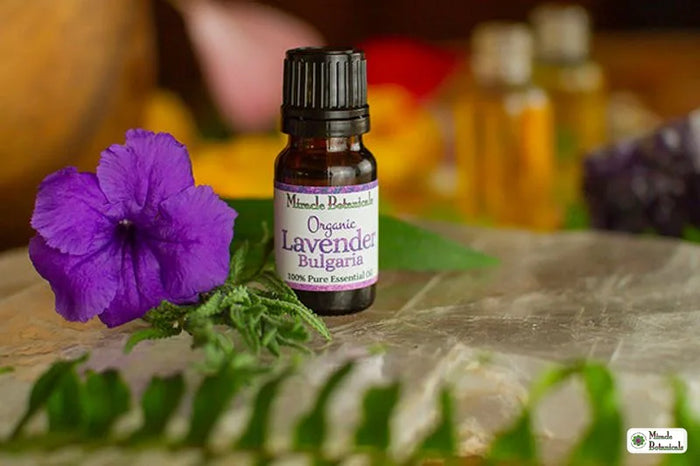
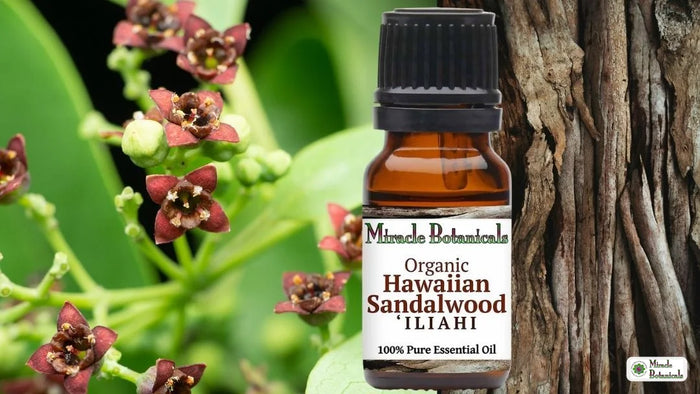
Miracle Botanicals uses "therapeutic grade" as a house standard with three conditions. Every oil is third-party tested for synthetics, pesticides and adulteration. No synthetic aroma chemicals go into the bottle. And the shop carries no absolutes, except one cocoa absolute extracted with food-grade ethanol. Outside that definition, the phrase promises nothing extra.
The family-run company, founded on Hawai'i's Big Island in 2011, publishes a GC/MS report on the product page of every single essential oil (for blends, on each ingredient oil's page). Pick any single oil from the best-selling third-party-tested essential oils and you can read its report before you buy.
The absolutes rule comes straight from its FAQ answer on therapeutic and food grade oils: "We only carry therapeutic grade essential oils. That's why we carry no absolutes, with the exception of our food-grade ethanol extracted Cocoa essential oil." The FAQ's reason is that almost all absolutes keep traces of their extraction chemicals.
That rule doesn't exclude CO2 extracts, which use pressurized carbon dioxide as the solvent. The CO2 turns back into a gas when the pressure drops. See CO2-extracted vs steam-distilled essential oils for how the two compare.
Who Certifies Essential Oil Grades?
Nobody certifies essential oil grades, because no grading scale exists. Independent standards do exist, but each measures something narrower. ISO standards set composition ranges for specific oils, organic certifiers inspect farming and handling, and a GC/MS lab reports what's in one batch. None of them labels an oil "therapeutic," "grade A" or similar.
| Label or document | Who defines it | Outside check? | What it tells you |
|---|---|---|---|
| "Therapeutic grade" | Each seller | No | Whatever that seller says it means |
| CPTG Certified Pure Tested Grade | doTERRA, the trademark owner | Partly (internal and third-party tests) | That doTERRA's own protocol was applied |
| ISO oil standards, such as ISO 3515 for lavender | ISO technical committee TC 54 | Only if a lab tests against it | Whether composition fits agreed ranges for that species |
| USDA Organic | USDA National Organic Program | Yes, by accredited certifiers | Farming and handling; see organic vs non-organic essential oils |
| GC/MS report | The testing lab | Yes, if the lab is independent | Compounds and percentages in one batch |
NAHA's safety guidance recommends buying from a supplier who analyzes its oils by GC/MS. That's a document, not a grade.
Testing catches what labels can't. When researchers ran GC/MS and stable isotope analysis on 30 commercial fennel, star anise and anise oils, 8 of them (27%) were adulterated (Murphy et al., Plants, 2024). A guide on how to read a GC/MS report walks through a real one.
What Does CPTG Mean?
CPTG stands for Certified Pure Tested Grade, a trademark owned by doTERRA for its own quality-testing protocol. No outside body awards the mark. doTERRA says the protocol combines internal tests with tests run by independent labs. It describes one company's process, not an industry-wide grade.
On its CPTG testing page, doTERRA lists methods including GC/MS, FTIR spectroscopy, chirality testing, isotopic analysis and heavy-metal screening. The same page acknowledges there's no internationally regulated definition of pure essential oils. A long test list is worth something; it's still a self-defined standard, best judged by the batch results behind it.
Does Therapeutic Grade Mean an Oil Is Safe on Your Skin?
No. A grade label describes an oil's source and contents, not how much your skin can tolerate. Even a tested, unadulterated oil is concentrated enough to irritate or sensitize skin when used undiluted, so check an essential oil dilution chart and learn how to patch test an essential oil first.
Tisserand made a related point in that 2010 post: a therapeutic grade oil and an oil free of toxic constituents aren't the same thing, because some plants make harmful compounds on their own. Purity can't remove a compound the plant produced.
Sensitization is the reaction to take seriously: an allergic skin response that can develop after one or more exposures and tends to be permanent. Irritation shows up quickly and fades once the oil is washed off. Oxidation raises sensitization risk, so an old, air-exposed bottle of a pure oil can be riskier than a fresh one.
Dilution is the main control. At the standard 30 drops per ml, a 2% blend is 6 drops in 10 ml (about 2 teaspoons) of carrier oil.
What Is the Difference Between Food Grade and Therapeutic Grade?
Food grade has an outside reference point, and therapeutic grade doesn't. In US food manufacturing, "food grade" generally means an ingredient meets Food Chemicals Codex specifications. The FDA also lists many essential oils, including lavender, peppermint, lemon and sweet orange, as generally recognized as safe (GRAS) for food use under 21 CFR 182.20.
GRAS isn't permission to swallow drops. It covers use as a flavoring under good manufacturing practice, and 21 CFR 182.1 caps the amount at what's reasonably required for its effect in the food. That's a trace spread through a whole batch, nothing like a drop of undiluted oil on the tongue.
Miracle Botanicals' FAQ says its oils are food grade, but that it doesn't recommend eating them unless you're a trained aromatherapist or following one's guidance. NAHA likewise doesn't support indiscriminate internal use. Ingestion is a bigger question for its own article.
The cocoa absolute is where the two labels meet. Its product page describes a hexane-free extraction with food-grade ethanol, the same detail the FAQ gives when it names cocoa as the one exception.
What Should You Do When a Label Says "Therapeutic Grade"?
Treat the phrase as a prompt to ask a follow-up question. A seller who means something by "therapeutic grade" can tell you exactly what, and can show you the GC/MS report for the batch you're buying. A seller who can't is selling an adjective, so spend your money where the evidence is.