
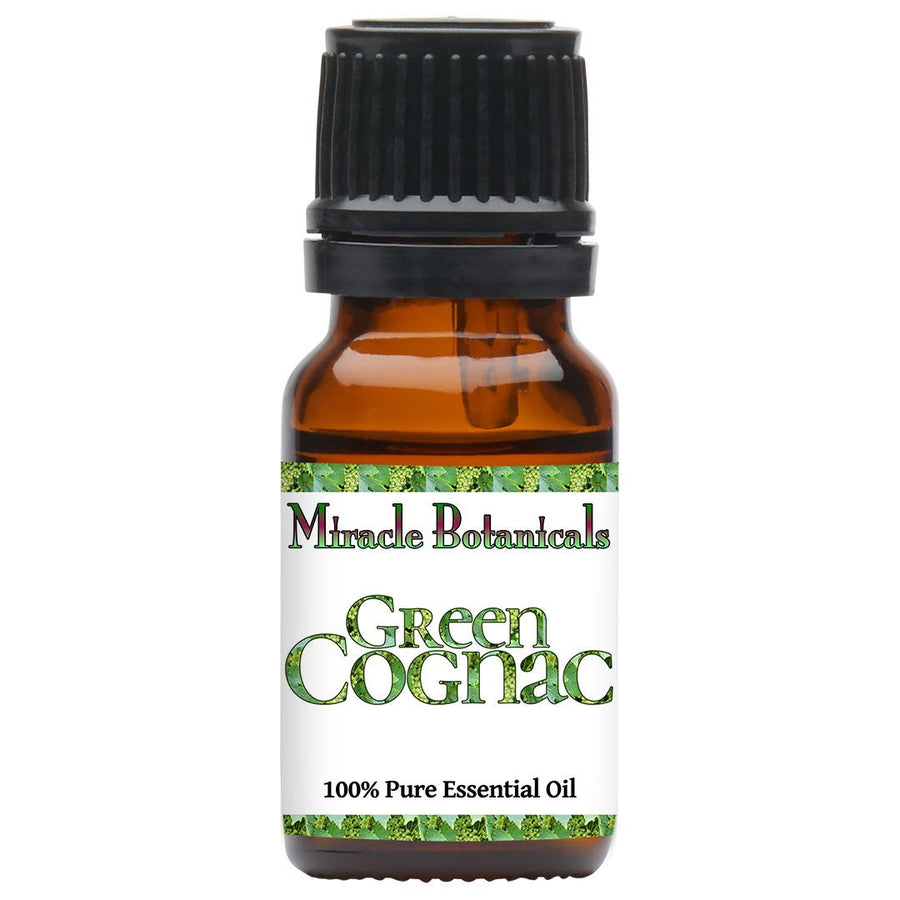
Cognac (Green) Essential Oil (Vitas Vinifera)
- From the lees of French wine. Green cognac oil is drawn from the sediment left after French wine ferments and ages, an unusual start for an essential oil.
- Ethyl decanoate leads the analysis. A fermentation ester, it stands behind the fruity, brandy-like character of the oil. See the chemistry.
- Dry, vinous and fruity. Green cognac oil reads sharp and fermented, closer to a fine wine than to sweet fruit.
- An oil we use ourselves. Like everything we sell, this is an oil that lives in our own cabinet.
- Third-party tested. An outside lab tests every oil we sell for synthetics and adulteration, and our distillers work in small batches.
- The same oil in every size. Pick the bottle that suits you on the Compare tab, and start with a little if green cognac is new to you. Compare sizes.

Product specification
Batch transparency
View the full compositionGreen cognac, the oil distilled from French wine lees
6 benefits of Cognac
The lift a trace brings to a blend
Green cognac oil brightens a blend in trace amounts, a fresh, fruity note that reads above the heavier oils. A drop is enough to lift a formula that has gone flat or dull. Used with a light hand, it opens a composition up rather than weighing it down.
A vinous, fruity facet
A vinous, sharp-fruit character is what green cognac lends to a composition, the sense of fermented fruit rather than sweet juice. It sits well in gourmand and fruity accords where a dry, unsweet edge is wanted. Perfumers use it where jam-like fruit notes need grounding in something drier.
A fixative that holds the drydown
As a fixative, green cognac oil holds a blend together and lends tenacity to the drydown, keeping lighter oils in place as they fade. It bridges sharp citrus at the opening to woody, resinous or floral material underneath. That staying power is why a trace of it earns its place in a formula.
A rare oil, drawn from wine
Rarity is the point of green cognac oil, an unusual material that comes from wine, not from a plant in bloom or a standing tree. It sits with the hard-to-find connoisseur oils we keep for people who know the difference. The wine origin and the green color are the proof it's what it says.
A little goes a long way
A little green cognac goes a long way, so a single drop is often all a blend needs. Give it time to settle from a harsh opening into something rounder before you judge it. Working in trace amounts is how you get the best of it.
Not a smooth cognac to sip
Sharp and fermented, this oil is nothing like the smooth cognac you sip from a glass. Overuse can turn a blend sour or fatty, so keep green cognac to a trace and let it work under the other oils. Knowing what it is not is half of using it well.
How to use
In a blend
PerfumeryIn perfumery, use it in trace amounts, one or two drops into a formula or diluted in perfumer's alcohol, and judge it on a scent strip as it dries down. A single drop shifts the whole character of an accord, so add it slowly and stop early.
On the skin
DilutedOn the skin, dilute the oil to 1 to 3 percent in a carrier oil, which is 6 to 18 drops in 30 ml. Patch test on your inner arm and wait a day before wider use. We do not use this oil neat, and it is not for internal use.
In the air
DiffuserIn a diffuser, one or two drops of the oil scent a room, since a little carries far. Add the water, run the diffuser, and let the room rest before you top it up.
3 recipes using this oil
Tap a recipe to see the full formula and method.
Method. Blend the drops into the jojoba in a small bottle, cap it, and let it rest a day before you wear it. The mandarin carries the opening and the coriander adds a soft spice, so the single drop of cognac sits underneath and holds it all in place.
Method. Add the drops to a water diffuser and let it run, then air the room and start again when the scent fades. The orange keeps it bright while the cognac gives the blend its dry, fruity edge.
Method. Combine the drops with the jojoba in a small bottle and roll it between your palms, then smooth it over the shoulders and the back of the neck. Use just a little cognac so the neroli and mandarin stay in front.
Technical information for this batch
At 38.2% this batch is dominated by Ethyl decanoate — the lead fermentation ester, formed as the wine ferments, and the source of the fruity, brandy-like character. Ethyl Laurate sits at 23.05%, Ethyl Palmitate sits at 11.86%. The oil is aqua green color with thin consistency, and it reads as a base note in a blend.
Compare sizes and pick your value
Every size is the same oil. The larger the bottle, the lower the price per ml.
Frequently asked questions
7 answers drawn from the product specification and our own use of this oil.


You may also like