


A DIY pillow spray for sleep only works if the scent stays evenly mixed in the bottle. Essential oils don't dissolve in water, so each recipe here uses either a hydrosol on its own or essential oil premixed with a solubilizer, with exact ml and drop amounts and a storage rule.
A pillow spray is one of several bedtime methods in our guide on how to use essential oils for sleep. To skip mixing altogether, lavender and other hydrosols can go straight into a mist bottle. Treat these sprays as part of a wind-down routine, not a treatment for insomnia.
Do you need an emulsifier for a pillow spray?
You need one only if the recipe contains essential oil. The ingredient you actually want is a solubilizer, a type of surfactant that disperses small amounts of oil evenly through water. Polysorbate 20 is the common choice. A spray made from hydrosol alone needs nothing added, because a hydrosol is already water with a trace of aromatic compounds.

"Essential oils are not water soluble," as the Tisserand Institute's bath safety guidance puts it. Shaken with water, oil breaks into droplets for a few seconds, then rises to the top, so the last sprays in a bottle deliver a burst of concentrated oil.
That oil lands where your cheek rests for hours, so it becomes skin contact, which is what the essential oil dilution chart exists to manage. If fragrance tends to irritate your skin, learn how to patch test an essential oil before putting any oil spray on bedding.
Why witch hazel and vodka don't fix it
Neither has enough alcohol. The Tisserand Institute says alcohol must be at least 80% (160 proof) to disperse essential oils, with 95% preferred. Vodka is about 40%. Witch hazel is mostly water and fully water soluble, even the 14% alcohol version, so oil floats on it as it does on plain water.
Polysorbate 20 or a plant-based solubilizer
The Tisserand Institute lists polysorbate 20, a non-ionic surfactant, for room sprays, body mists and linen sprays, starting at 1 part essential oil to 1 part polysorbate 20. Its plant-based pick, Solubol, also starts at 1:1 and can go up to 1 part oil to 8 parts Solubol. They're different products, so follow the label of whichever you buy.
Order matters. Stir the essential oil into the solubilizer first, then add water or hydrosol, so the solubilizer reaches every drop of oil before water does.
Hydrosol or essential oil, which makes the better pillow spray?
A hydrosol spray is simpler and milder: no solubilizer, no drop counting, and only trace amounts of aromatic compounds. An essential oil spray smells stronger and lets you choose the exact oils, but it needs a solubilizer and careful measuring. For a first batch, or for a sleeper who dislikes strong scent, start with hydrosol.
| Hydrosol-only spray | Essential oil + solubilizer spray | |
|---|---|---|
| Scent strength | Soft | Stronger, set by drop count |
| Mixing step | None | Premix, then the oil-bead test |
| What can go wrong | Microbial spoilage | Spoilage, plus uneven dosing if under-solubilized |
How do you make a DIY pillow spray for sleep?
Start with a clean 60 ml (2 fl oz) fine-mist bottle. Fill it with hydrosol, or premix essential oil with a solubilizer and top up with distilled water or hydrosol. The essential oil recipes below use 18 drops or fewer per 60 ml, based on 30 drops = 1 ml, which keeps them at 1% or lower.

You'll also want a 1 ml syringe, distilled water (not tap) and a dated label. Wash and fully dry the bottle first.
Every single essential oil from Miracle Botanicals has a GC/MS report on its product page (see the FAQ on GC/MS test reports), so you can check what goes into the bottle.
Recipe 1, Lavender hydrosol mist (no mixing)
- 60 ml lavender hydrosol
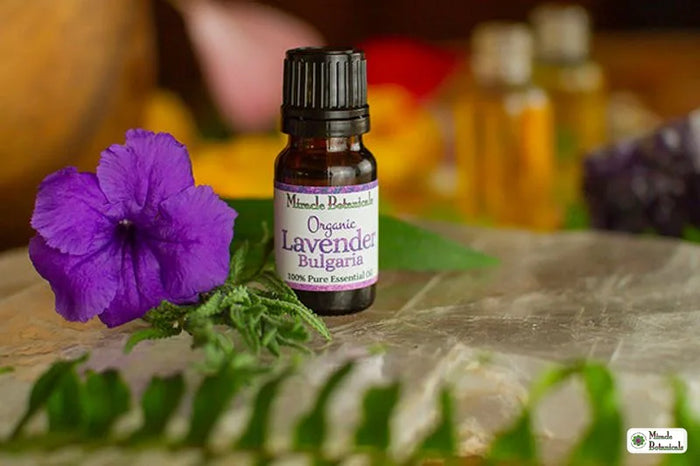
Pour it into the mist bottle and cap it. Miracle Botanicals' Hawaiian lavender hydrosol is steam distilled from the flowers and leaves of Lavandula angustifolia grown in Hawai'i. For a woodier note, use 45 ml lavender hydrosol and 15 ml Hawaiian sandalwood hydrosol.
Recipe 2, Lavender and cedarwood spray (oil in water)
- 12 drops lavender essential oil
- 6 drops Atlas cedarwood essential oil
- 0.6 ml (about 1/8 teaspoon) polysorbate 20, or a plant-based solubilizer at its label ratio
- Distilled water to the 60 ml mark
The 18 drops of essential oil equal 0.6 ml, a 1% blend.
- Drop both essential oils into the empty bottle.
- Add the polysorbate 20 and swirl for about 30 seconds until uniform.
- Add the distilled water, cap and shake for 10 seconds.
- Do the oil-bead test. Let the bottle stand for 1 minute, then hold it to the light. Beads or a sheen on top mean the oil isn't fully solubilized, so add 0.2 ml more polysorbate 20, shake and check again.
Recipe 3, Roman chamomile and marjoram in neroli hydrosol
- 6 drops Roman chamomile essential oil
- 6 drops sweet marjoram essential oil
- 0.4 ml polysorbate 20, or a plant-based solubilizer at its label ratio
- Neroli hydrosol to the 60 ml mark
The 12 drops equal 0.4 ml, about 0.7%. The oil load sits below Recipe 2 because neroli hydrosol already carries a floral, citrusy scent. Follow the same four steps, using hydrosol in place of water.
How should you use a pillow spray at bedtime?
Shake the bottle, then mist the pillowcase 2 or 3 times from about 20-30 cm (8-12 inches) away. Wait until the fabric feels dry before you lie down. Spray fabric only, never your face or skin, and keep the mist away from your eyes.
Test-spray a hidden corner first, especially on silk or dark fabric, to check for marks.
Can you just put a few drops of lavender oil on the pillow instead? It's the unmixed-spray problem in its strongest form: undiluted oil right where your face goes. For more scent, add a mist rather than more drops. The research on lavender inhalation is covered in lavender oil for sleep.
How long does homemade pillow spray last?
Plan on using an unpreserved homemade pillow spray within 2 weeks, kept in the fridge between uses. Throw it out sooner if it turns cloudy, smells off or shows specks. An opened hydrosol in its original bottle lasts longer: Miracle Botanicals advises refrigerating its lavender hydrosol after opening and using it within six months.
Cold storage helps less than people assume. A 2015 study in Food Research International found bacteria multiplied in every rose and orange blossom hydrosol it tested in non-sterile containers, at room temperature and at 5 °C (41 °F). The authors concluded that neither the essential oil content nor cold storage kept hydrosols microbiologically stable. Your own spray bottle is non-sterile too.
Keeping a spray for months takes a broad-spectrum preservative made for water-based cosmetics, used at the supplier's stated rate. Essential oils and solubilizers don't preserve anything, and the Tisserand Institute advises using homemade water-based mixes in short order.
Who should skip or adapt a pillow spray?
Anyone pregnant, anyone with asthma or fragrance sensitivity, and anyone making a spray for a child should check first. Recipe 1 is the gentlest option, though hydrosols still release aromatic compounds. Don't mist an infant's crib bedding or a pet's bed, and store the bottle out of children's reach.
During pregnancy, check the essential oils to avoid during pregnancy before using Recipe 2 or 3. For children, see the age-by-age guide to essential oils safe for kids.
This article is educational, not medical advice. If you're pregnant, have a breathing condition or take regular medication, talk to your doctor or midwife first, and ask your pediatrician before using any spray around a child.
Start with Recipe 1: it tells you whether you like scent on your pillow at all, with nothing to measure. Move to Recipe 2 or 3 once you have a solubilizer, and mix only what you'll use before laundry day.