
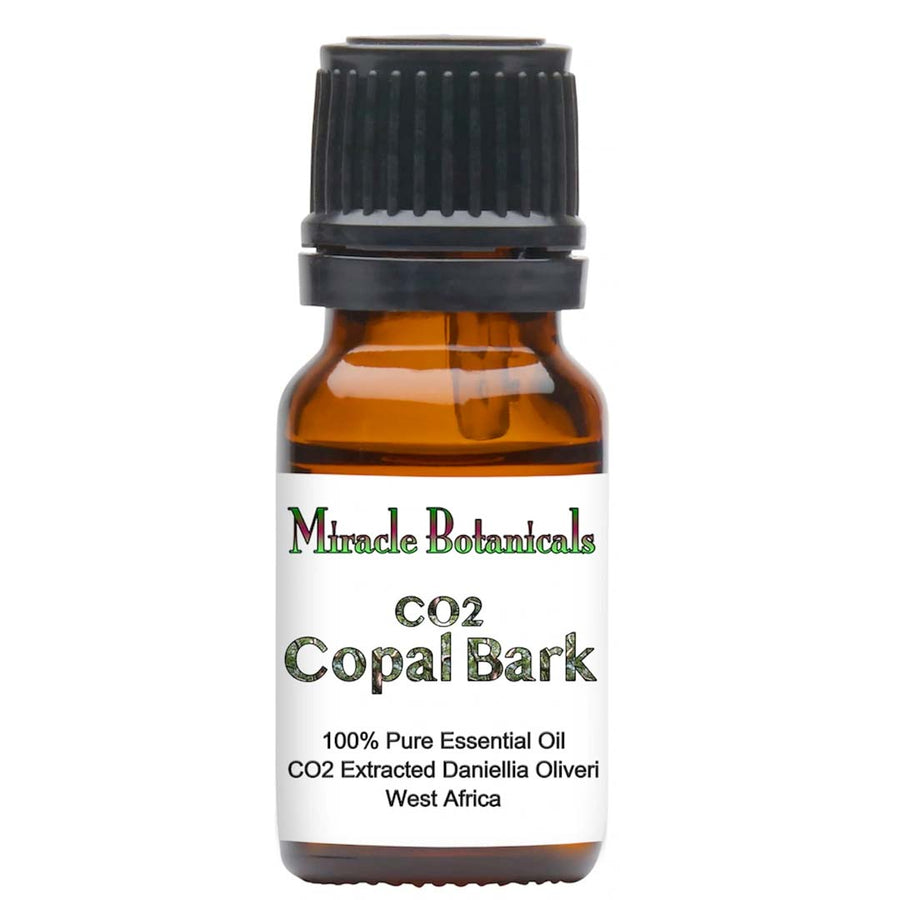
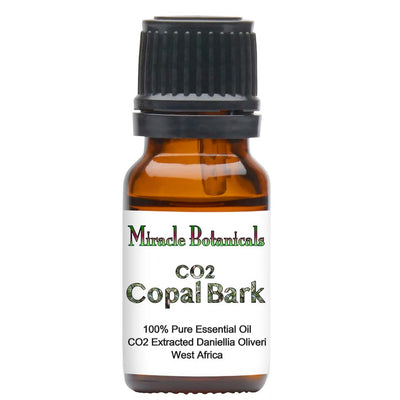
Copal Bark Essential Oil (Daniellia Oliveri)
- A bark CO2 extract of Daniellia oliveri. Taken from the bark of the West African copal tree, in the botanical family Fabaceae.
- The West African copal, not the Mexican one. Copal is a shared name for several unrelated resin trees; this is the Fabaceae copal, not the Mesoamerican Burseraceae kind. Which copal is this.
- Warm, with a frankincense character. A soft, woody scent reminiscent of frankincense, lifted by a light citrus edge.
- An oil we use ourselves. Like everything we sell, this is an oil we use ourselves.
- Third-party tested. Every oil we sell is outside-lab tested and made by small-batch producers.
- The same oil in every size. Pick the bottle that suits you on the Compare tab, and start small if copal bark is new to you. Compare sizes.

Product specification
Our quality promise
Copal bark, a West African copal from Daniellia oliveri
6 benefits of Copal Bark Essential Oil
An incense for the diffuser
A few drops of copal bark in a diffuser fill a room with a warm, resin-rich scent, the same character the tree's gum has carried as incense for generations. Across its homeland the gum was burned to perfume the air of a house. This copal bark oil gives you that without lighting anything or clearing away ash. Begin with a few drops and add more if you want it stronger.
A warm anchor for natural perfume
In a natural perfume, copal bark works as a fixative, holding the lighter oils in place while it adds a warm, woody depth of its own. The tree's gum has long gone into perfume for its staying power, and the oil behaves the same way on a blotter, lasting long after brighter oils have lifted off. A drop or two grounds a citrus or floral accord. Reach for the pure oil where you want a scent that holds.
Close to frankincense in character
Copal bark sits close to frankincense, sharing the warm, resin depth that gives frankincense its appeal, which makes it a natural pick if you already love that scent. Both come from aromatic, resin-bearing trees. In a diffuser or a blend it works where you might otherwise reach for frankincense. It pairs easily with the frankincense oils we carry.
A copal named for its species
This is a genuine African copal, named for the tree it comes from rather than sold as an unlabeled resin. The word copal is shared by several unrelated trees, so a bottle marked only copal tells you little, while ours tells you the tree, the part and how it was made. That plain naming is what makes it a connoisseur's oil. If you have bought copal before and never known what was in it, this is the answer.
A quiet scent to wear
Worn on the skin, copal bark reads as a soft, warm wood rather than a sharp perfume, staying close to the body and slow to fade. In a carrier oil it makes an understated personal scent. It suits people who find heavier resins or loud florals too much. What is left by evening is the warm wood, and little else.
A citrus lift over warm wood
Copal bark opens with a light citrus lift that settles into a warm, woody scent, so what you notice first is not quite what stays. That movement is what makes it useful in a blend, giving both a bright start and a warm, lasting depth. It reads warmer than a fresh citrus and softer than a raw resin. A touch is plenty in a blend.
How to use
Diffuser
In the airStart with 3 to 5 drops in a water diffuser for a medium room, then add a drop at a time until it smells right to you. Copal bark carries well, so a little goes a long way. Run it 30 to 60 minutes, then give the room a break for the same time with some fresh air moving.
On the skin
TopicalDilute copal bark to 1 to 2 percent before it touches skin, which is about 6 to 12 drops in 30 ml of a carrier oil like jojoba. Keep the face lower, nearer 0.5 to 1.2 percent. Patch test a small spot on the inner forearm and wait a day before wider use. We do not use this oil neat, and it stays out of reach of children.
Bath
In the waterStir 4 to 6 drops into a tablespoon of carrier oil or an unscented bath oil, then add it once the tub is full. Oil and water do not mix on their own, so the carrier is what lets the drops reach your skin diluted, not neat. Swirl the water and get in.
3 recipes using this oil
Tap a recipe to see the full formula and method.
Method. Add the drops to a water diffuser and run it for 30 to 60 minutes. The sweet orange lifts the top while the frankincense and copal bark hold the warm resin underneath. Put in one more drop if the room wants it.
Method. Combine the oils in a 15 ml roll-on bottle and cap it, then roll it between your palms to blend. Dab it on the wrists and the base of the throat, where the wood sits close. Keep it capped and out of sunlight, and use it within a few months.
Method. Mix the drops into the jojoba in a small bottle and shake it gently. Smooth it over the arms and shoulders after a shower, while the skin is still warm. Cap it, keep it out of sunlight, and use it within a few months.
Compare sizes and pick your value
Every size is the same oil. The larger the bottle, the lower the price per ml.
Frequently asked questions
7 answers drawn from the product specification and our own use of this oil.
Frequently bought together

You may also like