
Table of Contents
Mugwort: The Herb Behind the Folklore
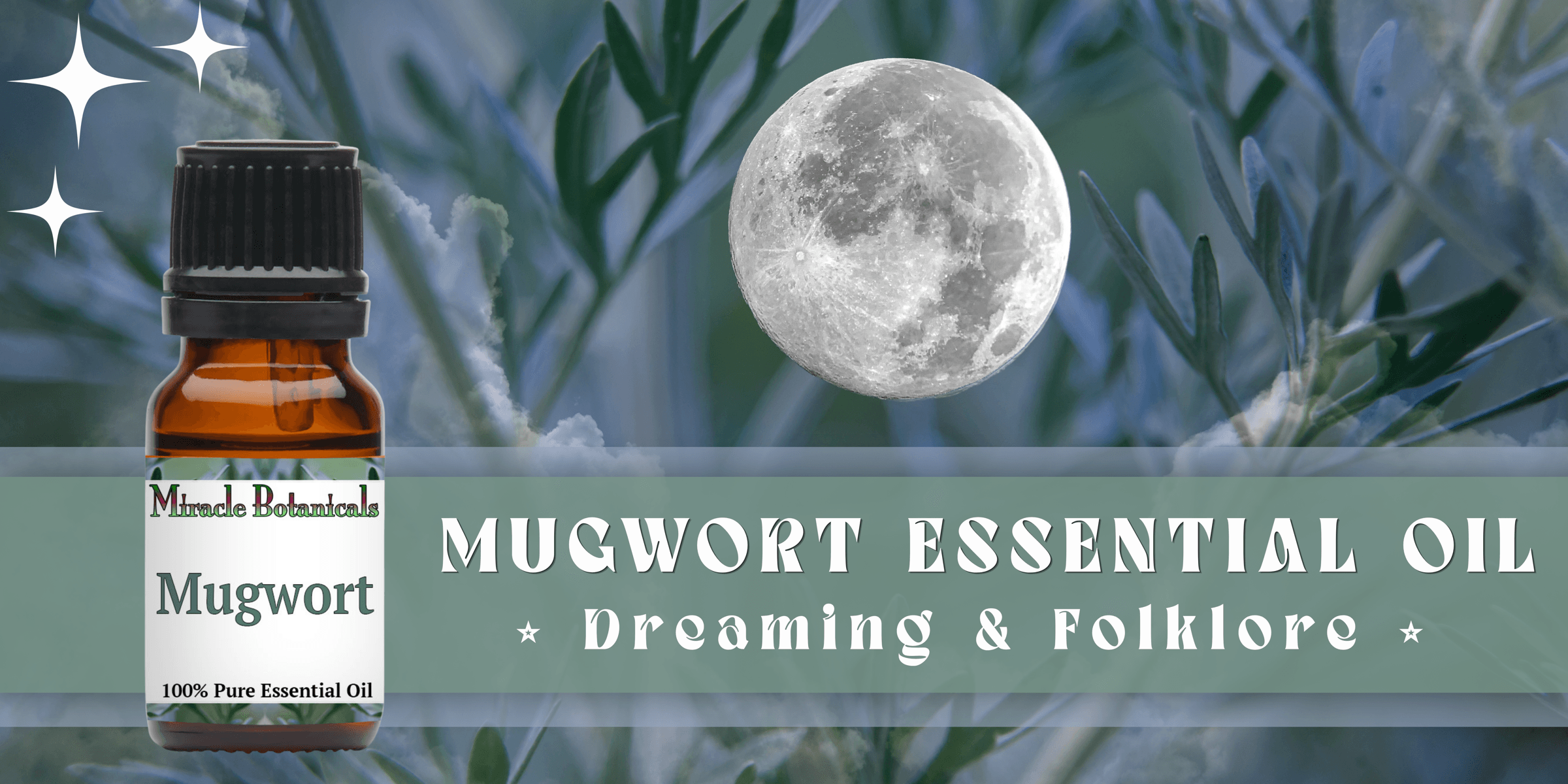
The use of mugwort essential oil for dreams invites us into a fascinating world where ancient herbal traditions and the mysteries of the subconscious come together. For centuries, Mugwort has stewarded a fascinating relationship between plants, dreams, and the inner world. Known for its aromatic leaves and long history in traditional herbal practices, this resilient member of the Artemisia genus has become associated with dreamwork, nighttime ritual, and the exploration of the subconscious.
Today, mugwort continues to intrigue herbalists, aromatherapy enthusiasts, and those drawn to the symbolic world of dreams. But what is behind its reputation as a dream herb? How has it been used throughout history, and what can its essential oil chemistry tell us about this remarkable plant?
Let's explore this mystical plant together by diving into its botanical composition, the cultural traditions that surround it, and some personal experiences...
Meet the Mugwort Herb
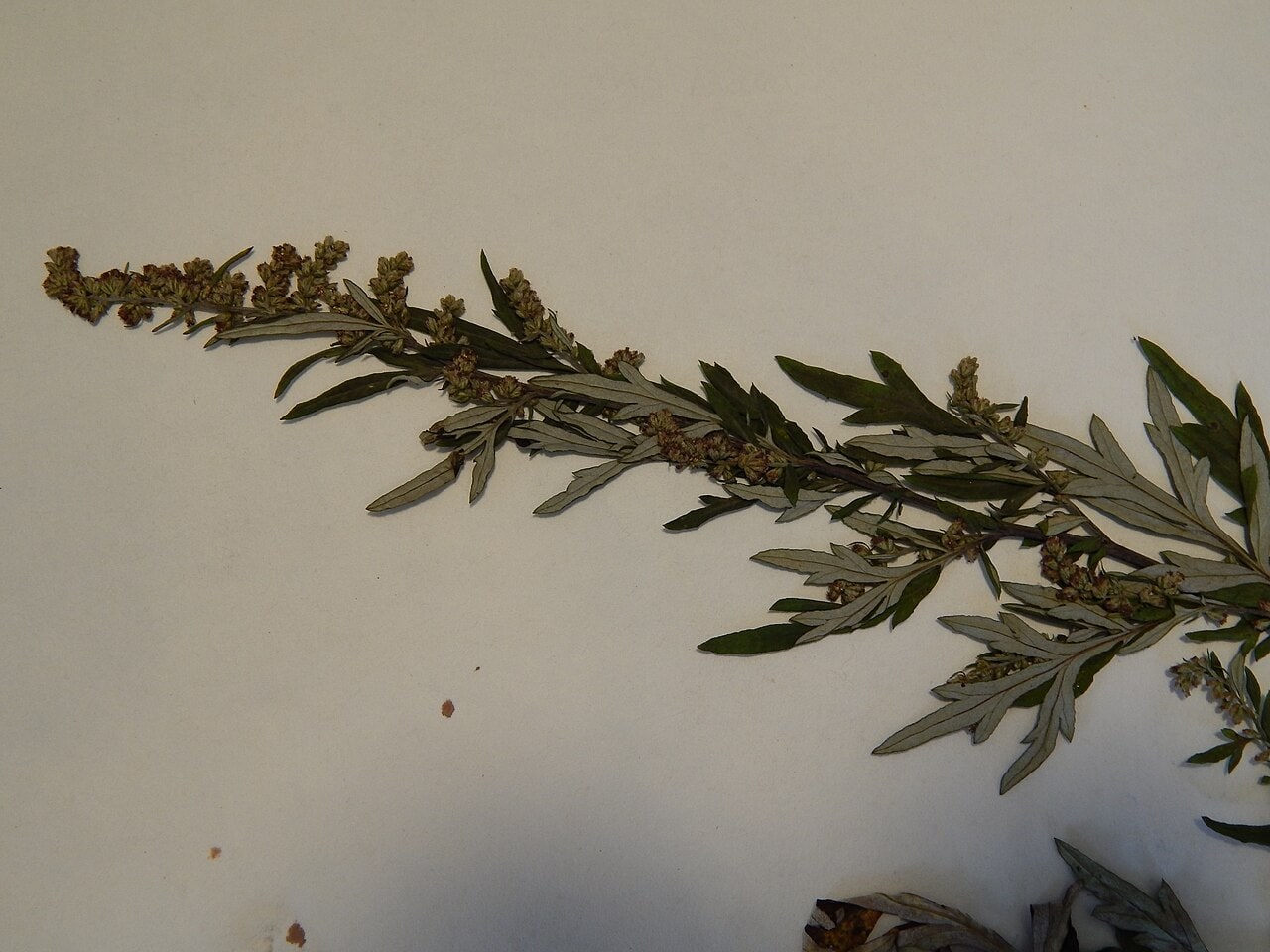 Mugwort leaves and seeds in Haiku, Maui
Mugwort (Artemisia vulgaris) is a perennial aromatic plant native to Europe and parts of Asia and North Africa. Its seed has spread throughout many temperate regions of the world, including North America.
Its tall woody stems, deeply divided leaves, and distinctive herbal aroma have made Mugwort recognizable across generations. The plant's scent could be described as herbaceous, earthy, bitter, and a bit woody. The leaves often have a green upper surface and a paler, sometimes silvery underside to them. Mugwort blooms small clusters of yellowish or creamy white flowers, but they are quite easy to overlook for how subtle they are.
Medicinal uses may include:
•Easing menstrual cramps & supporting women's reproductive health
•Aiding in digestive health like bloating, discomfort, and appetite stimulation
•Supportive in alleviating anxiety and insomnia
Historical Influence of the Mugwort Herb
 Anglo-Saxon Nine Herbs Charm
The genus name Artemisia is linked to Artemis, the Greek goddess associated with the moon, wild animals, hunting, childbirth, and nature. The Artemisia family also includes several other herbs, such as Wormwood, Tarragon, and Davana. (We also have a really cool Artemisia Sampler Set!)
The word “wort” comes from the Old English wyrt, meaning root, herb, or plant. Wort became a word to describe a medicinal or beneficial plant. In European folklore, Mugwort became associated with protection, travel, and spiritual symbolism. People believed that it warded off evil spirits and ensured safe journeys so they would tuck it into their sandals during the day or stick it under their pillows at night. It was believed to enhance dream clarity, making dreams more vivid and memorable. This quality made it a popular herb among those seeking deeper insights during sleep.
The plant appears in the Old English Nine Herbs Charm, an early medieval herbal text that reflects its importance in historical plant traditions. The Nine Herbs Charm describes mugwort as a powerful plant againstpoisons and harmful influences. Over time, it became associated with practices intended to encourage meaningful dreams including dream pillows and nighttime herbal customs.
In traditional Chinese practices, certain Artemisia plants have been used in moxibustion, a practice involving the controlled warming of specific points on the body. Mugwort-related plants also appear in Japanese and Korean seasonal and herbal traditions.
Mugwort is often called the "Mother of Herbs" for its esteemed status in various cultures, specifically Europe & Asia, where it's been used for centuries, for its wide-ranging medicinal, protective, and culinary uses.
Mugwort Herb and Lucid Dreaming
Lucid dreaming is when a person becomes aware that they are dreaming while the dream is still taking place. One can practice this on their own, but it can be induced with the support of herbs. Mugwort is an incredible introductory herb to this practice for its reliability and protective qualities. Even if one does not attain lucidity in the dream space, this herb may inspire greater dream vividness and dream recall.
Ways to work with Mugwort herb for dreaming...
★Make a tea to drink close to bedtime (tip: this herb has a very bitter taste, but if you add a squeeze of lemon or citrus the bitterness will soften)
★Lay a sprig or herb satchel next to your bed or under your pillow
★Make a tincture (extract the herb in alcohol)
★Infuse Mugwort in oil and apply it before bed
★Add fresh or dried plant to an herbal bath
Note: We do not recommend ingesting Mugwort Essential Oil internally. These recommendations are for the dried or fresh herb.
Its valuable reputation is primarily rooted in traditional practices and personal experiences rather than controlled human sleep studies. For modern dreamwork enthusiasts, mugwort can be appreciated as a botanical symbol of curiosity, awareness, and the desire to explore the dreaming mind.

A Dive into Our Mugwort Essential Oil
Beyond its rich folklore, Mugwort has a fascinating chemical composition. Like many aromatic plants, Artemisia vulgaris produces volatile compounds that contribute to its distinctive scent. Scientific analyses have identified a range of naturally occurring constituents in mugwort essential oil, including...
1. Thujone
Thujone is a naturally occurring monoterpene ketone found in certain aromatic plants, including some Mugwort varieties. It interacts with the nervous system, including GABA-related signaling pathways. GABA is the brain's major inhibitory neurotransmitter. It helps regulate neuronal excitability and plays an important role in sleep-related neural activity.
2. 1,8-cineole (Eucalyptol)
This aromatic compound is also found in eucalyptus and Rosemary. It contributes to a fresh, penetrating, slightly camphoraceous quality to the scent of some Mugwort essential oils. Its contribution to Mugwort's recognizable aroma is well established.
3. Camphor
Another naturally occurring compound identified in many Mugwort essential oils. It contributes a strong, cooling, medicinal fragrance. Camphor has well-documented biological activity, but it can also be toxic at inappropriate exposures.
4. Other Aromatic Constituents
Depending on the plant's origin and chemical profile, Mugwort essential oil may also contain compounds such as sabinene, germacrene D, artemisia ketone, and davanone. These constituents contribute to the diversity of Mugwort's aroma and chemistry.
Mugwort Essential Oil & The Dream Realm
Using Mugwort essential oil for dreams in contemporary dreamwork is best understood as combination of botanical tradition, personal symbolism, and intentional ritual. Scent is deeply connected to memory, emotion, and personal associations. Aroma can become part of familiar routines, including ritual that help us shift our attention from the activities of the day toward quiet or mindful reflection. Using Mugwort essential oil to deepen a dream practice is a wonderful way to create intentional space for our dreams to speak. Our dreams naturally seek to communicate with us so by extending our hand they often respond with clarity, depth, and meaning.
Dilution Chart
When working with Mugwort Essential Oil for dreaming, we recommend diluting it in a carrier oil and then applying it to the body. This is a great dilution chart to use if you want to use Mugwort on its own in a carrier oil.
| Dilution | 1 fl oz carrier: mL | Approx. drops | 2 fl oz carrier: mL | Approx. drops | 4 fl oz carrier: mL | Approx. drops |
|---|---|---|---|---|---|---|
| 2% | 0.60 | 12 | 1.21 | 24 | 2.41 | 48 |
| 5% | 1.56 | 31 | 3.11 | 62 | 6.23 | 125 |
| 10% | 3.29 | 66 | 6.57 | 131 | 13.14 | 263 |
Mugwort safety note: This chart illustrates dilution math only. It does not establish safe concentrations for mugwort essential oil.
Recipe: Dreamy Mugwort Body Oil...
1oz of your preferred carrier oil
7 drops Red Mandarin essential oil
5 drops Lavender essential oil
2 drops Ylang Ylang Extra essential oil
2 drops Mugwort essential oil
4 drops Frankincense Carterii essential oil
Uses for Mugwort Essential Oil: Dreamwork & Beyond
Herbaceous, warm, and bitter, Mugwort has an aromatic character that invites curiosity. Its connection with dreaming can inspire a nighttime ritual, while its distinctive fragrance also offers possibilities for meditation, creative exploration, and natural perfumery.
A note on mindful use: Mugwort essential oil is a concentrated material that may contain thujone and camphor. The ideas below are aromatic and symbolic uses, not treatments or promises of a particular result. Do not ingest it, apply it undiluted, or add it directly to bathwater. The essential oil is different from the dried herb, tea, or an infused oil. Learn more about essential oil use in our Miracle Botanicals guide.
Dream Journaling & Evening Intention
Mugwort essential oil for dreams can become a personal scent cue for a dream-journaling practice. Pair a brief, professionally guided aromatic experience with a quiet intention: “Tonight, I welcome curiosity about my dreams.” Keep a notebook near your bedside and record whatever you remember in the morning, even if it's simply one word or an emotion. With continued devotion, one can enhance a dream practice and invite in more vivid recall over time.
Quiet Meditation & Reflection
Mugwort’s earthy, herbal character can be explored as a focus for a short meditation. Notice the aroma, the associations it brings to mind, and the quality of your attention. Rather than seeking a specific effect, let the practice be an invitation to pause and observe. Simply holding the bottle in the palms of your hands can inspire personal observation of the plant's energy & effect on your own being.
Botanical Scent Study
Explore Mugwort as part of an aromatic education. Describe its warm, bitter, herbaceous notes in your own words and compare them with other botanical aromas. Keeping a scent journal can help you discover which fragrances feel familiar, intriguing, or personally meaningful.
Natural Perfumery
Mugwort can offer an unusual herbal accent in an oil blend. Our oil is listed as a top note, making it an interesting material for studying the opening character of a fragrance. Try exploring what mixes well with Mugwort by holding it next to another oil and smelling.
Creative & Seasonal Rituals
Mugwort’s folklore can inspire poetry, artwork, or a seasonal moment of reflection. Pair it with a journal prompt such as “What am I ready to explore?” or “What did last night’s dream bring to mind?”. Create a painting or piece of art with the oil nearby to inspire the imagination. Write a poem on what is illuminated through the aroma. Find an outlet that can create your own relationship with this beautiful plant.
❖ Whether your interest is dreaming, fragrance, or a deeper relationship with plants, let curiosity and care guide the experience. Explore our Mugwort Essential Oil for dreams to learn about its botanical identity, origin, and aromatic profile. ❖
- Written by Annie Kurtyka -
Mugwort Essential Oil (Artemisia Vulgaris)
$13.97
Botanical Name: Artemisia Vulgaris Plant Part: Herb Method of Extraction: Steam Distilled Country of Origin: Morocco Color/Consistency: Clear to Light Yellow Color with Thin Consistency Aroma: Herbaceous, Warm, Bitter Perfumery Note: Top Main Chemical Components: Camphor, Cineole, Alpha-Thujone, Beta-Thujone, Artemisia… read more

FAQs
Is Mugwort safe to use while pregnant?
No. Mugwort should not be used while pregnant or breastfeeding.