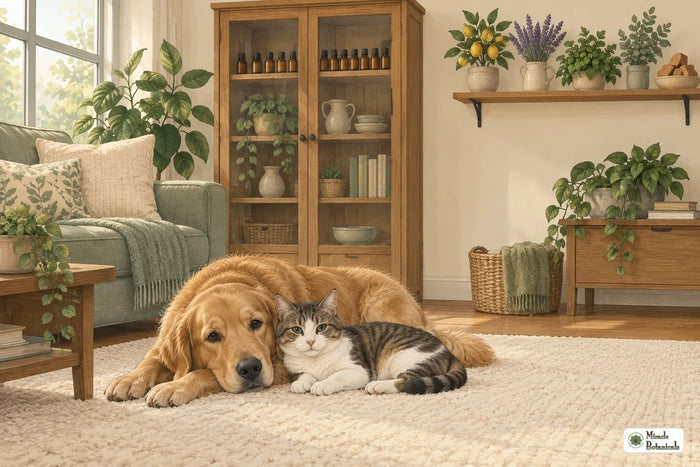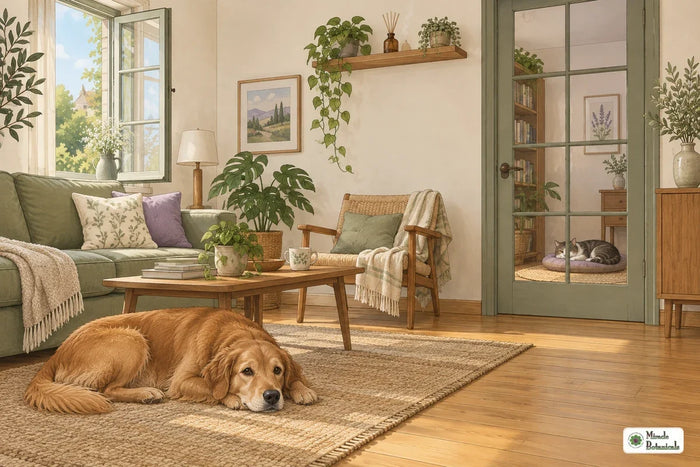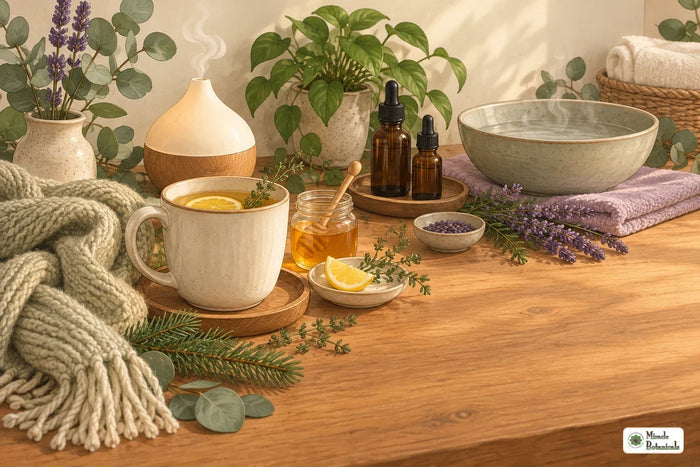

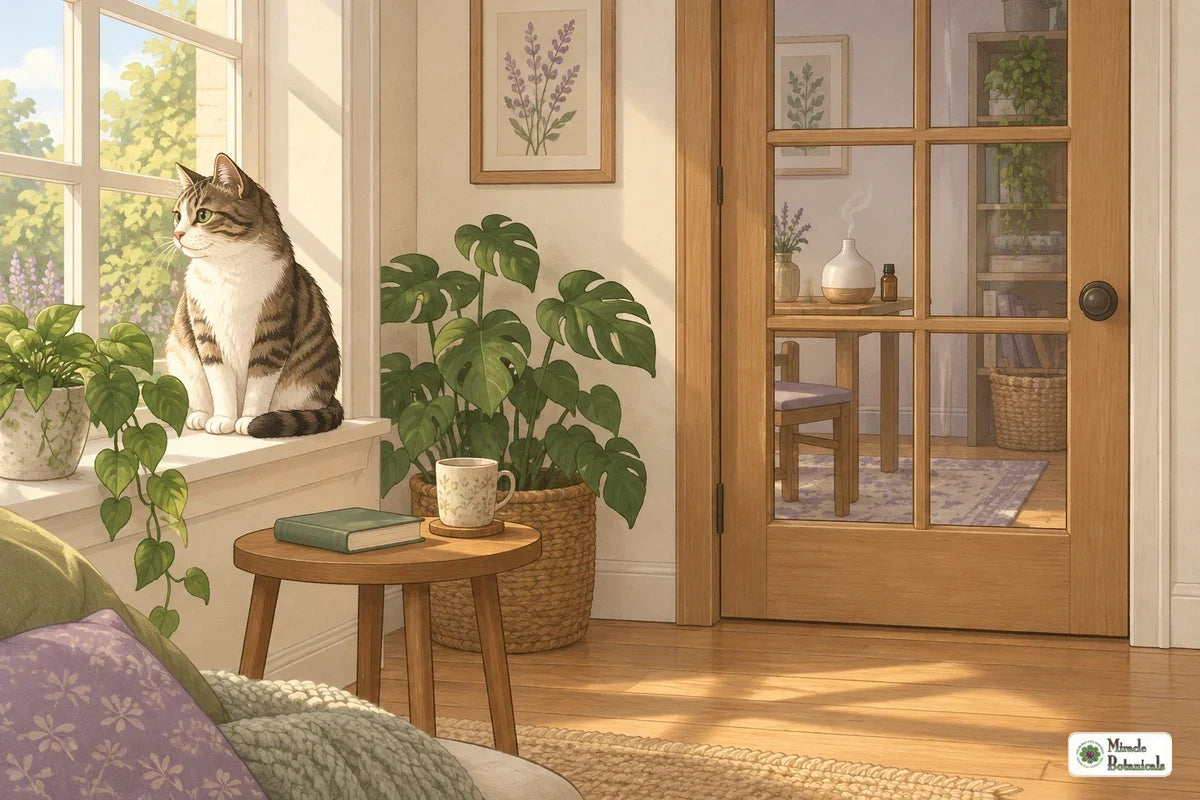

Yes, essential oil diffusers are bad for cats in any room the cat uses, because the mist reaches a cat through the air it breathes, the droplets on its fur and the oil it licks off while grooming. Cats lack the glucuronidation pathway that clears phenols and terpenes, so a diffuser in a cat's home runs only in a room the cat cannot enter, with lavender, cedarwood atlas, frankincense or Roman chamomile at 3 drops per 100 mL of water for 30 minutes. The 11 oils the ASPCA names as toxic to pets, plus lemongrass, stay out of a home with a cat. The sections below explain the 3 routes, the room rule in 5 steps, other ways to scent a house, the oils to avoid and the signs of exposure. The supplementary part answers whether a passive diffuser is safer and what changes when a cat shares the house with a dog.
Are essential oil diffusers bad for cats in a room the cat uses?
Yes, essential oil diffusers are bad for cats in a room the cat uses, because the mist reaches a cat by 3 routes, which are the air it breathes, the droplets that settle on its fur and the oil it licks off while grooming. Each route adds to the same dose, and a cat's liver clears that dose slowly.
An ultrasonic diffuser turns water and oil into a cool mist of fine droplets. The droplets land on the floor, the sofa, the food bowl and the cat's coat. A cat grooms several times a day, so oil on its fur reaches its mouth. Cats lack the glucuronidation pathway that prepares phenols and terpenes for excretion, because the cat's UGT1A6 gene, the main phenol-clearing enzyme in other mammals, is a non-working pseudogene, according to a 2000 study by Court and Greenblatt in Pharmacogenetics. An insecticidal dip containing d-limonene, the main constituent of citrus oils, caused drooling, unsteady walking and muscle tremors in cats in a 1986 study by Hooser, Beasley and Everitt in the Journal of the American Veterinary Medical Association. A diffuser in a cat's room delivers the same compounds in smaller amounts, day after day.
Is an essential oil diffuser safe for cats?
No, an essential oil diffuser is not safe for a cat in a shared room, and a diffuser runs in a cat's home only in a room the cat cannot enter, with lavender, cedarwood atlas, frankincense or Roman chamomile at 3 drops per 100 mL of water for 30 minutes. The ASPCA's safest setting for any oil is a short session in an area the pet cannot reach.
The 4 oils are lower risk rather than safe, because no essential oil has a proven safe level for a cat. The room rule keeps the cat out during the session and the airing afterwards. A cat with asthma or another breathing problem skips diffused oils altogether, as the ASPCA advises for pets with breathing problems. A kitten and an older cat follow the same rule, with the airing time extended until no scent is left.
Can you use an essential oil diffuser with cats in the house?
Yes, you can use an essential oil diffuser with cats in the house when the diffuser runs only in a room the cat cannot enter, the door stays shut during the session and the room is aired before the cat returns. The room rule takes 5 steps.
- Choose a room the cat can be kept out of, such as a home office or a spare bedroom.
- Check that the cat is out of the room, then close the door.
- Run a lower-risk oil at 3 drops per 100 mL of water for 30 minutes.
- Open a window and air the room until the scent has faded.
- Empty and wipe the tank before the door opens, so no scented water stands where the cat can drink it.
A bedroom where the cat sleeps at night is a room the cat uses, so a diffuser does not run there before bed. A cat that slips in when the door opens is carried out, and the session ends.
How can you make your house smell good without harming your cat?
You make your house smell good without harming your cat in 4 ways, which are fresh air, odour removal at the source, washing soft furnishings and diffusing only in a room the cat cannot enter. Each one freshens a home without putting oil on a cat.
Fresh air from an open window clears cooking and litter odour faster than a scent covers it. Odour removal means scooping the litter box every day, which takes away the source instead of masking it. Washing the cat's bedding, throws and cushion covers removes the odour held in fabric. A diffuser session in a closed room scents that room for the people who use it. Plug-in oil warmers, scented candles and air freshener sprays put fragrance compounds in the same air the cat breathes, so they follow the diffuser rule. A hydrosol holds about 0.02% to 0.05% dissolved oil, and there is no published evidence that hydrosols are safe for cats, so a hydrosol mist follows the same room rule. Calming, flea season and litter odour, each handled without oils, are set out in the guide to essential oils and cats.
Which oils are not safe to diffuse around cats?
The oils not safe to diffuse around cats are the 11 oils named by the ASPCA Animal Poison Control Center, which are cinnamon, citrus, clove, eucalyptus, pennyroyal, peppermint, pine, sweet birch, tea tree, wintergreen and ylang ylang, plus lemongrass, and these 12 are avoided in a home with a cat, even in a closed room. A closed door keeps the cat out of the air, and the oil still travels on hands, clothes and the diffuser itself.
Each listed oil carries a main constituent that a cat clears slowly. Lemon oil is 56% to 78% limonene, peppermint oil is 30% to 55% menthol, eucalyptus globulus oil is 65% to 85% 1,8-cineole and tea tree oil is 35% to 48% terpinen-4-ol. Clove carries eugenol, a phenol, and wintergreen and sweet birch carry methyl salicylate, the aspirin-like compound. Lemongrass sits outside the ASPCA oil list, carries 70% to 80% citral and is avoided for its sensitising effect. The Latin name, main constituent and constituent class of each of the 11 listed oils are set out in the full list of cat-toxic oils.
Safety and precautions for a cat that has breathed diffuser mist
A cat that has breathed diffuser mist shows 6 common signs, which are drooling, vomiting, unsteady walking, tremors, laboured breathing and pawing at the face or mouth, and the first response is fresh air and a call to a veterinarian. The response follows 5 steps.
- Move the cat to fresh air and switch the diffuser off.
- Wash oil from skin or fur with a mild liquid dish soap and lukewarm water, which lifts oil better than water alone.
- Keep the bottle, so the veterinarian knows the oil and its Latin name.
- Call a veterinarian or the ASPCA Animal Poison Control Center at (888) 426-4435, where a consultation fee may apply.
- Leave vomiting to the veterinarian, because an oil brought back up can be breathed into the lungs.
A cat that coughs after a session, crouched low as if bringing up a hairball with none produced, is showing airway irritation and goes to the veterinarian. Signs can appear hours after the session, so a cat that seemed well at first is watched for the rest of the day.
Is a passive diffuser safer for cats than an ultrasonic one?
Yes, a passive diffuser is safer for cats than an ultrasonic one in one way, because it releases scent by evaporation without droplets of oil, and it follows the same room rule, because the cat still breathes the same compounds. Reed diffusers, clay pendants and fan diffusers with an oil pad are passive types.
Passive types carry their own risk. A reed diffuser holds 20 to 30 drops per 100 mL of base in an open bottle, and a cat that tips it walks through the spill and licks the oil off its paws. A heat warmer holds hot oil on a surface a cat can jump to. A nebulising diffuser atomises undiluted oil at 5 to 10 times the output of an ultrasonic unit, so it is the riskiest type in a home with a cat. No diffuser type moves an oil to a level that lets a cat share the room.
What changes when a cat shares the house with a dog?
A cat that shares the house with a dog sets the rule for both, because a dog's session in a room it can leave needs an open door, and an open door lets the cat in. In most homes, a room the cat cannot enter is a closed room with no pet inside.
The dog keeps its own limits inside that rule. The oils the ASPCA lists, such as lemon and peppermint, run only in a room the dog cannot enter in a dog-only home, and they are avoided altogether once a cat lives there. A bird or a small pet in the same house keeps its cage in a room where no diffuser runs. The 3 levels for each species, and the diffusing rules that sit behind them, are set out in the guide to diffusing around pets.
Diffusers and accessories from Miracle Botanicals
Miracle Botanicals sells essential oil accessories beside its about 200 single essential oils, and every single oil is third-party tested with GC/MS, with the batch report available on request. Each product page names the oil by its Latin name, so a cat owner can check a bottle against the 12 oils on this page before it enters the house. Browse the diffusers and essential oil accessories to compare units with timers for a room the cat cannot enter.