
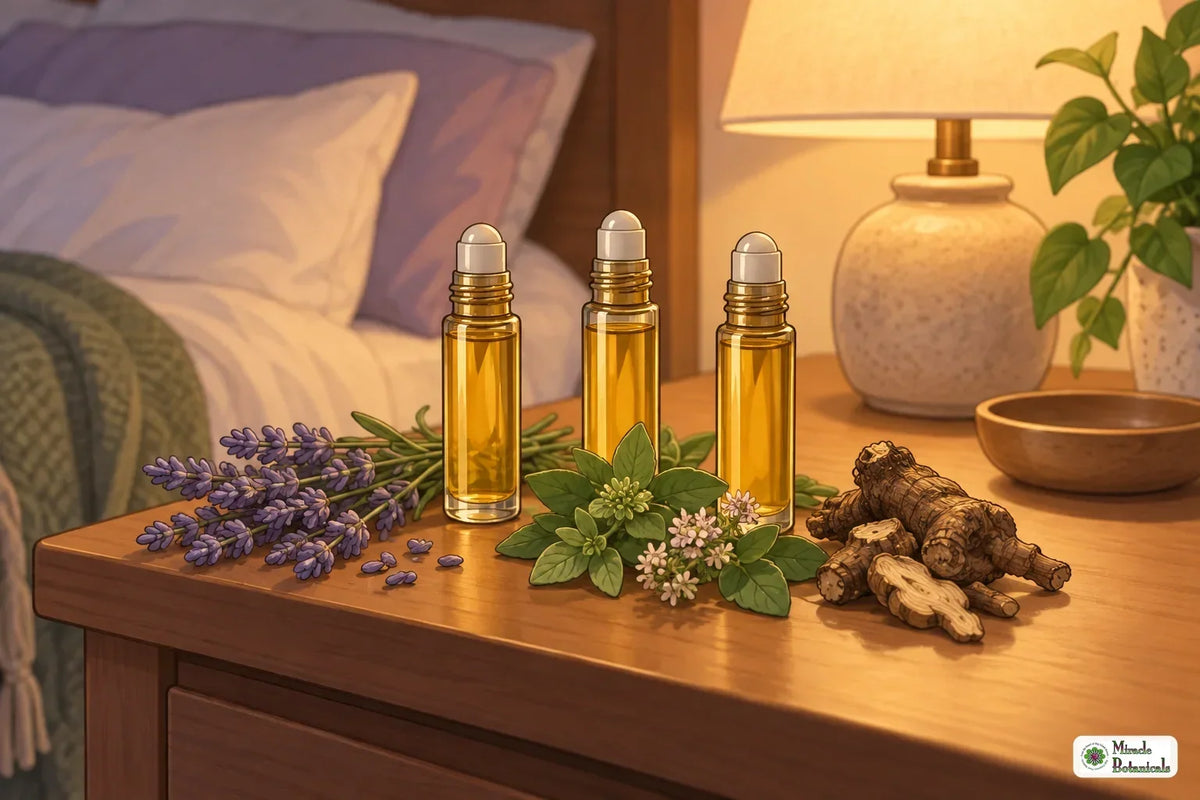

A sleep roller blend recipe for adults needs just 3 drops of essential oil in a 10 ml roller bottle, topped up with carrier oil. That makes a 1% blend, the low end of the essential oil dilution chart for skin. The three bedtime blends below use calming oils like lavender, spikenard and Hawaiian sandalwood.
A roller is one of several bedtime options, and the guide to how to use essential oils for sleep compares it with diffusing and baths. Before the first night, learn how to patch test an essential oil, since you'll use the blend on the same skin night after night.
Recipe 2 uses one drop of Spikenard essential oil, a musky, steam-distilled root oil from India.
What do you need to make a 1% sleep roller?
You need a 10 ml glass roller bottle, a carrier oil and 3 drops of essential oil in total, not 3 drops of each oil. At the Tisserand standard of 30 drops per ml, a 10 ml bottle holds about 300 drops, so 3 drops of essential oil make up 1% of the blend.

That "in total" is where roller recipes go wrong: three oils at 3 drops each is 9 drops, a 3% blend.
- Drop the essential oils into the empty bottle first.
- Fill with carrier oil to the bottle's shoulder, about 10 ml (roughly 2 teaspoons, or 1/3 fl oz).
- Press in the roller fitting, cap it and roll the bottle between your palms.
- Label it with the oils, the carrier and the date.
Thick oils such as vetiver drip slowly, so hold the bottle upright and let each drop fall on its own. Shaking can release two, and the Tisserand Institute notes that no two drops are identical anyway.
The carriers below are interchangeable, and the guide to the best carrier oil for essential oils compares their textures.
What are 3 calming sleep roller blend recipes?
Each recipe below uses 3 drops of essential oil in a 10 ml roller, so all three sit at 1%. Recipe 1 is floral and herbal, the easiest starting point. Recipe 2 is earthy and musky, built around one drop of spikenard. Recipe 3 is warm and woody, with Hawaiian sandalwood in kukui nut oil.
| Recipe | Essential oils (3 drops total) | Carrier (fill to 10 ml) | Scent |
|---|---|---|---|
| 1. Lavender and marjoram | 2 lavender, 1 sweet marjoram | Apricot kernel oil | Floral, herbal |
| 2. Spikenard and cedarwood | 1 spikenard, 1 lavender, 1 Atlas cedarwood | Meadowfoam seed oil | Earthy, dry wood |
| 3. Island woods | 1 Roman chamomile, 1 vetiver, 1 Hawaiian sandalwood | Kukui nut oil | Sweet, deep, woody |
Recipe 1, lavender and sweet marjoram
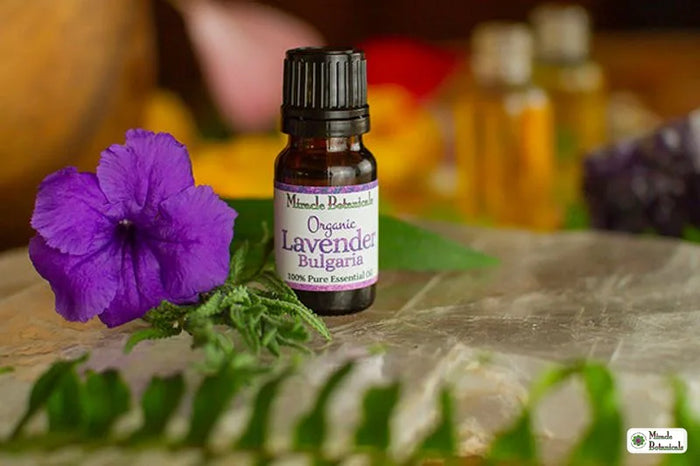
Bulgarian lavender (Lavandula angustifolia) carries this blend, and one drop of sweet marjoram (Origanum majorana) adds a warm herbal edge. Marjoram's product page lists linalool, the compound lavender is known for, among its main components. Apricot kernel oil, cold pressed in Italy, is light and glides over wrists.
Recipe 2, spikenard, lavender and Atlas cedarwood
Spikenard leads even at one drop. Lavender softens its musty side, and Atlas cedarwood (Cedrus atlantica) adds a dry, balsamic note. Meadowfoam seed oil is thicker than apricot kernel, with a faint nutty smell; Hawaiian macadamia nut oil swaps in easily.
Recipe 3, Roman chamomile, vetiver and Hawaiian sandalwood
This is the Big Island blend. Kukui nut oil is cold pressed in Hawai'i and absorbs quickly, and Hawaiian sandalwood ('iliahi, Santalum paniculatum) is distilled from the heartwood. Vetiver from Haiti brings heavy, sweet earthiness under Roman chamomile. If daisy-family (Asteraceae) plants bother you, patch test the chamomile with extra care.
What essential oils can you put in a sleep roller?
Any calming oil whose scent you enjoy can go in a sleep roller, as long as the total stays at 3 drops per 10 ml. Good stocked choices are lavender, sweet marjoram, Roman chamomile, spikenard, vetiver, Atlas cedarwood and Hawaiian sandalwood. Swap them between the recipes, one or two drops each.
Give strong, earthy oils like spikenard and vetiver one drop; lavender and marjoram can take two. Use oils that still smell fresh, because oxidized oils are more likely to cause skin sensitization.
Leave cold-pressed citrus such as lemon or non-FCF bergamot out of a leave-on roller. Those oils can cause phototoxic reactions in sunlight, and wrists rarely stay covered the next morning.
Is spikenard essential oil good to use at bedtime?
Spikenard can be a pleasant bedtime scent, but the sleep evidence is thin and comes only from animals. In published studies, mice that inhaled spikenard or its isolated compounds slept longer after a sedative drug or behaved more calmly under stress. A literature check in October 2026 found no human trials of spikenard and sleep.
Spikenard comes from the roots of Nardostachys jatamansi, a Himalayan relative of valerian in the honeysuckle family (Caprifoliaceae). Its product page calls the scent earthy, musty and valerian-like.
In a 2008 study, vapor from a spikenard extract sedated mice, and calarene alone reproduced the effect. A 2015 Planta Medica paper found inhaled aristolen-1(10)-en-9-ol lengthened drug-induced sleep about as much as 1 mg/kg diazepam, and flumazenil blocked it, pointing to the GABA-A receptor. A 2014 study found inhaled valerena-4,7(11)-diene reduced stress behaviors in restrained mice.
Those were caged mice given mostly single compounds, from plants labeled N. chinensis, a name World Flora Online now files under N. jatamansi. One drop on your wrist is a very different exposure, and spikenard is not a treatment for insomnia.
Spikenard chemistry also varies widely. A 2026 GC-MS study of Nepalese rhizome oils found 37-40% valeranone in two districts' samples, while a third district's oil was led by dihydrotagetone. Miracle Botanicals posts a GC/MS report on the product page of every single essential oil, as its FAQ on testing and purity explains, so you can see which compounds your lot contains.
A 5 ml bottle holds about 150 drops, enough for roughly 150 rollers, a sensible budget for a plant under wild-harvesting pressure.
Where should you apply a sleep roller?
Roll the blend onto your inner wrists, the center of your chest below the collarbones, or the back of your neck. These spots sit close enough to your nose to catch the scent as you settle. Keep the roller away from your eyes, the inside of your nose, your lips and any broken or irritated skin.

The Tisserand Institute puts facial products and sensitive areas at 0.5-1.2% and body oils at 1-3%, so 1% fits both. Its 3-10% rollerball range assumes a small patch of skin, and nightly use is a different case: the Tisserand Institute's guidance on allergic reactions notes that risk rises with concentration, frequency and duration of use.
Mucous membranes are more sensitive than skin, and undiluted oil in the eye causes a chemical burn, according to the Tisserand Institute's safety guidelines. Wash your hands after rolling.
If your skin reacts easily, Tisserand suggests applying oils to clothing instead, or try a DIY pillow spray for sleep.
Who should skip these sleep roller recipes?
These are adult recipes, so children and pregnant readers need different guidance, and anyone with a health condition should check first. Talk to your doctor before using an essential oil roller if you take prescription sleep or anxiety medication, have a diagnosed sleep disorder, or have reacted to fragrance before.
If you're pregnant, read the guide to essential oils to avoid during pregnancy first. Children need lower, age-based strengths, set out in the guide to essential oils safe for kids by age.
Sleep trouble lasting weeks deserves a doctor's visit. A roller is a calming ritual, not a fix. For human studies on scent and sleep, start with the research on lavender oil for sleep.
Which sleep roller should you make first?
Make recipe 1 first if you've never mixed a roller, because lavender and sweet marjoram are familiar scents and easy to judge. Try spikenard only after smelling a drop on a paper strip. If you love it, recipe 2 is worth the price of the oil. If not, recipe 3 gives you depth without the musk.